
Categories
Failing well Reflections Slow down vulnerability Work

The Fear We Carry: A Guide to Reclaiming Confidence Through Vulnerability and Action

I’m taking a mini detour from my series on Understanding Responsibility and the Impact of Actions to write on confidence.

It starts with fear. ‘I can’t do it,’ the voice in our head whispers. The mind hesitates and almost stutters out a ‘but…,’ but the voice continues with a more trivial reason ‘I am not tall enough, they need six feet, I’m only 5.6.’ ‘I’m shy.’ ‘I’m socially awkward.’ ‘They’ll come to see me as who I am — the impostor.’

And what’s more, the more we present this person to the world, the more we become it, the ‘socially awkward’ boy, the ‘not tall enough’ girl, ‘the impostor,’ and the list goes on. We are who we say we are.

If I didn’t define myself for myself, I would be crunched into other people’s fantasies for me and eaten alive.

Audre Lorde.

I have often dined with fear. It was my default reaction when I faced uncertainties; I know how crippling fear can be when we aren’t sure about anything; I can even describe the taste — salty, metallic, bitter — when fear becomes anxiety. I’ve found that this state of mind often leads to unhealthy reactions to situations.

Fear does not appreciate the light of awareness. When we call fear by its name, we acknowledge its presence, enabling us to approach the situation with vulnerability and proactivity in seeking solutions. Calling the problem its name allows one to start from a place of vulnerability and gratitude and arrive at forgiveness and clarity with trust in oneself.

Fear dampens confidence. When we let fear in, we become our fears, often hindering our ability to function in the presence of struggle. I’ve felt fear varying from ‘what if nobody wants to listen to me?‘ ‘what if I’m unable to provide for my family?’ I’ve found that in most situations, this fear has always been less about myself and more about others and what people will think.

I am careful not to personalise fear, for when I say ‘my fear,’ it becomes true — my fear. Instead, I express it as ‘I feel fear.’ ‘I have a fear.’ ‘The fear I’ve felt.’ This way, I’m acknowledging a state of emotion that isn’t identical with my identity. This approach helps me see this state as a visitor just here to visit, and should be on its way soon.

I have a fear, and I find that when this fear comes up in my head, I become less confident and start to stutter. The people closest to me could write a series about it. Others, however, remain oblivious unless I open up. Then, they struggle to fathom how someone perceived as ‘bold‘ as I could ever be shy.

People see me as extroverted and wonder what I mean when I mention that I struggle with talking. Just being able to articulate my thoughts and express them to others in a large social setting drains my body of energy. A colleague said it was difficult to believe I had such struggles because I didn’t show it, and I responded that I hid it well.

Each time I unmute my microphone, I battle between making my voice ‘heard’ enough and the voices in my head asking – ‘Is my voice strong enough?‘ ‘Am I making sense?‘ ‘Do these people want to listen to me?’ ‘Am I losing them?‘ ‘Uh oh, are they about to interrupt me? Have I stopped making sense?

So, when I started the new year, it wasn’t surprising that my journal entry was ‘I will use my voice more.’

I realise it is not easy to tell someone to be brave and confront their fears without telling them how to. The concept of bravery, as explored in my previous work, extends far beyond merely overcoming fear. At that moment, fear is all they can see; it is all that exists. I have been on both sides of the tunnel: the fearful person and the person dishing the advice. We must also remember to listen to ourselves when we dish out these bits of advice.

Whether you think you can, or you think you can’t — you’re right.

Henry Ford

If we surrender to fear, we remain where we are, stranded, stagnant. Someone who is afraid of taking the plunge to study for a new course that would take four years to complete because they think there’s no time is correct.

There’s no time if we say there’s no time. However, four years is always in the future and will eventually come. Start today, and in four years, this person will be on the verge of completion, but start later, and it will still take four years.

The next time the thought of fear comes, slow down to reflect on where you were several years ago. If you could have taken a step toward your goal back then, imagine where you could be now. Now, project yourself into the future and consider if you would regret not starting today. What’s the worst that can happen? Let these reflections spur you to action.

Fear blames because it needs an outlet to move responsibility away from the self. It finds another, who is responsible, constantly referring to the past or someone whose fault it is they can’t take responsibility in the moment.

Fear prolongs suffering.

Fear hinders our progression to the next stage. It presents a situation as ‘the obstacle,’ rather than puzzle pieces. It complicates matters, not just for us but for everyone in our lives.

Fear makes it difficult to stay grounded in the present, as it continually catapults us into a non-existing future, thus disabling our ability to see and appreciate what is happening in the present.

Many of us face fear; not even the CEO of the biggest company in the world is immune. We all have demons that keep us awake deep in the night and leave us restless long after sleep has fled. Those tiring days filled with wishes, prayers, hopes for things to be different, and anxiety about the future.

Yet, we are here, still grappling with fears, albeit new ones. If only we could look back in gratitude and see how far we’ve come.

‘beloved’ is both verb and noun, both identity and instruction. Fear is an affront to your spirit, so don’t be scared, be loved.

Moyosola Olowokure

The above quote illuminates love as the antidote to fear. When love takes over, everything feels alright — even though everything has always been okay — we just had not realised it.

Suddenly, everything becomes light and free. Freedom comes with love and clarity, bringing a new wave of confidence. We transform, becoming captivating with a new sense of allure, and in the process, we discover a new version of ourselves.

Fear is the greatest deterrent to confidence. Confidence is on the other side of fear; I searched for the synonyms and found the following:

assurance, self-assurance, self-confidence, self-reliance, self-esteem, boldness, certainty, conviction, trust, faith, positivity, poise, assertiveness, sureness, fearlessness, courage, self-trust, belief, security, composure.

The term ‘confidence‘ comes from the Latin word ‘confidentia,’ which means ‘trusting in oneself.’

Many people have reached where we aspire to be primarily because of how confident they are in themselves. They might not be more qualified than us, yet, like a butterfly with its vibrant and bold display, their confidence is immediately captivating.

Charmed by the butterfly’s radiance, it’s easy to overlook the reticent worker bee diligently making honey or the unassuming wallflower producing nectar. Yet, it’s important to remember the butterfly itself isn’t the source of the nectar enhancing its allure.

We must remember that hard work, resilience, and talent form the basis for long-lasting confidence.

By recognising our fears and calling them by their name, we bring them into the light and take responsibility for them.

We take responsibility by first slowing down to give gratitude for where we are coming from and the clarity of knowing that something is wrong and then committing towards bringing ourselves to the spotlight through curiosity and an action plan.

In my case, I began to assert myself more within my circles. In my community, I started leading some of the weekly meditation and Sunday gratitude sessions on ClubHouse. I also started participating more in the conversations. I’m not there yet, but I’m using my voice more.

Growth is uncomfortable; it’s like working a tight muscle until it stretches. I remember feeling uncomfortable the first time I turned on my camera during a video call. Now, it feels awkward to have a call with the camera off.

When we can address fear by its name, we’ve taken the first step towards light, and thereon, we can find ways to work out a solution. In time, we realise that it isn’t even all that bad.

In the words of Moyosola Olowokure, ‘Fear is an affront to your spirit. be loved.’

Fear is passive, stagnating our spirit, while love and confidence—emotions synonymous with action—propel us forward. Fear avoids action, whereas our spirit inherently thrives on doing. As we immerse ourselves in action and curiosity, we push back against fear until it becomes a mere shadow and a distant memory.

As Sang Zhi aptly puts it in my recent favourite series, ‘Hidden Love,’ ‘after all the bad things are over, all that is left are the good things. So, from now on, you must be even more certain that you are the best.’

You must be kinder to yourself. Affirm this to yourself that you are the best in the world, and no one can tell you otherwise.

Thank you so much for taking the time to read this piece. What fears do you carry with you? More importantly, what strategies have you found effective in combating these fears? Please, share your experiences and insights in the comment section. Your story might be the encouragement someone else needs.

Categories
Reflections Understanding Responsibility and the Impact of Actions Work

Part 2: The Interconnectedness of Responsibility and Its Impact on Society

In part 1 of this series, I shared a personal struggle that inspired this reflection on responsibility, intention, and action. Now, let’s delve deeper into this sensitive topic that carries so much weight in our lives, relationships, and societies.

The topic of responsibility and intention holds dear in my heart. I have initiated numerous conversations with those willing to engage, seeking to understand the root of neglecting responsibility, evasion of fault and explain why it matters in every relationship.

From first-hand experience, I understand that when someone avoids taking responsibility, someone else must shoulder the burden of that action, which means bearing responsibility for another’s irresponsibility. Many may resonate with this, as I have often found myself playing the role of the person who has to take responsibility for someone else’s inactions.

We witness a lack of responsibility in different contexts; in the professional setting, when an employee fails to fulfil their task, someone else must step in to complete the work. Outside work, when a child, sibling, spouse, friend, or parent neglects personal responsibility, others around them may feel obligated to step in; this could be a sibling who cleans up after another, a friend who excuses their friend’s behaviour, a spouse or parent who covers their partner’s or child’s mistake, or even a child stepping in for a parent.

These situations depict the ease with which responsibility can transfer from one person to another. This dynamic raises significant questions: to what extent should individuals continue to shoulder additional burdens on behalf of others, and how can we motivate others to assume responsibility for their actions?

What is Responsibility?

Responsibility is a duty associated with our actions. The Cambridge Dictionary defines responsibility as ‘something that it is your job or duty to deal with.‘ This concept refers to an expectation or obligation to act in certain ways to achieve particular outcomes. Responsibility prompts questions such as ‘What do I need to do?’ ‘What is expected of me?’ and ‘What choices must I make in this scenario?’

Responsibility can take many forms, and we can categorise it into direct or indirect. Direct responsibility encompasses duties and obligations we assign ourselves, which stems from past decisions and choices. They are more individualistic, originating from personal decisions made independent of others. These might include personal goals, self-improvement tasks, or commitments we make to ourselves. Direct responsibility could vary from exercising regularly, starting a course to more complex ones like starting a family and raising a child.

In contrast, indirect responsibility involves duties assigned to us by others, typically related to our occupied roles. These responsibilities may result from our social roles, societal norms and expectations, or tasks assigned to us by others. In our professional lives, these might include tasks assigned by a manager or responsibilities that inherently come with our job role. In our personal lives, these could be duties or roles associated with being part of a family or community, like caring for a sick family member. These responsibilities are generally less voluntary and more prescribed by our circumstances or others.

How Does Individual Responsibility Affect The Society Around Us?

Individual responsibility plays a crucial role in every functioning system. From the intricacies of a bustling city to the regimented societies of ants and bees, if a single cog in this machine fails to fulfil its duty, the entire system is at risk. This principle applies to a worker bee gathering nectar as much as it does to a human maintaining essential utilities.

Consider the role of an obstetrician in a local clinic responsible for delivering a baby. A delay or failure in their job can endanger the expecting mother’s life. A visiting surgeon, faced with a coinciding surgical operation, may have to make difficult decisions. If the mother is in distress and the surgeon’s other patient isn’t too critical, the surgeon might extend her schedule to assist with the delivery. The ripple effects of these decisions and outcomes can significantly impact multiple lives.

In the animal kingdom, the roles of workers, soldiers, and breeders in ants, bees, and termites, or hunters, defenders, and babysitters in wolf packs, are all crucial for survival. While it’s often argued that animals lack moral judgment, with actions primarily driven by instinct, nature, and the imperative to survive and reproduce, they still reflect a form of responsibility essential to the survival and reproduction of their species. However, in human societies, the concept of responsibility goes beyond basic survival, involving moral and ethical implications.

As we turn our attention back to human society, we see that acceptance and execution of responsibility are integral to the smooth functioning of our communities. When an individual assumes responsibility, they accept accountability for their actions. This acceptance contributes to trust, fairness, cooperation, and mutual respect for those involved.

Consider two examples of internal dialogue:

  • ‘I need to do my job, so that my customers can trust me.’
  • ‘If I don’t study my lessons, I won’t pass the exams, and I won’t make OAU. How will I help my family? Thus, I need to study my lessons.’

These examples showcase two individuals with different goals and values. The first person sees the need to do their job well to earn customer trust. The second person contemplates the practical implications of not studying, linking it to their broader life goal of helping their family.

Individual responsibility often starts when one can link their choice to their purpose, as illustrated with the two individuals in the dialogue.

In line with the saying, ‘charity begins at home,’ it stands to reason that one cannot assume responsibility for another without first taking responsibility for oneself. Hence, direct responsibility feeds into indirect responsibility, and in this way, we move from the ‘I’ to the ‘altruistic.’ Personal responsibility can evolve into a broader, altruistic responsibility toward others in our community.

Let us also consider different scenarios involving two adults and a child in varying environments.

If two adults mutually decide to start a family, they share the responsibility for nurturing any children that result from this decision.

There will be expectations for the child to perform some familial roles and for the family members to be responsible members of their community. By becoming part of a society, we inherit responsibilities like understanding and adhering to social norms, being considerate and respectful of others, and contributing to the community. Nonetheless, being a responsible member of society is a continual journey of learning and personal growth, necessitating a commitment to the shared principles of justice, fairness, and mutual respect.

Thank you for reading. As we progress in this series, I encourage you to reflect on your understanding of responsibility. How do you view your responsibilities, and how do they influence your societal roles? Share your thoughts in the comments below. In the next part of this series, we will delve deeper into responsibility, exploring the role of intention, action, and reason and discussing how we can move together as a community.

Categories
Mindfulness Reflections Work

When do we make out time to pause?

There are some posts you read on the internet that make you pause. One of them is from 8fit’s Coach Emily McLaughlin. Emily shared this on her Instagram page, and I have been thinking a lot about it.

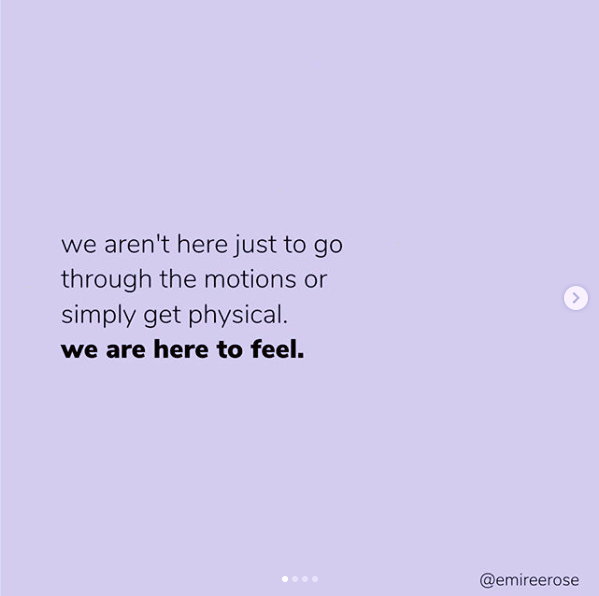
“We aren’t here just to go through the motions or simply get physical. We are here to feel.”

Emily, Head Coach at 8fit

It made me wonder what the next step would be when we finally get what we want. What follows then? Do we stop chasing after sunsets or money or love or whatever it is that we have built our purpose around? Or do we find something else to chase then? 

T. S Elliot once said, “We shall not cease from exploration, and the end of all our exploring will be to arrive where we started, and know the place for the first time.”

In this same regard, Lee Ann wrote: “We will never reach a point in life where we will have everything we have ever desired. The whole point of life is the launching of new desires and then aligning with those desires.”

Following from the two thinkers I quoted, If we do not get to a time when we would have it all, then, I hope we remember to make time to pause?

Pause –  the act of suspending activity temporarily.

thefreedictionary.com

Emily’s post made me reflect on the act of pausing. We do too much in the pursuit of our purpose. To make sense of this world, we are nurses, teachers, project managers, digital marketers, CEOs, venture capitalists, engineers, writers, etc. We have many interests, but sometimes our passions might not be our job, yet we need money, and in search of how to make ends meet, we dabble in many things and forget to make out time to stop momentarily.

Do you ever feel like you are living a monotonous life? You wake up with your alarm, rush to the bath, eat breakfast, go to work, get stuck in traffic, eat dinner, open social media, go to bed, repeat.

If you are anything like me, you do.

I will rephrase for those who work from home. Your alarm startles you, and you remember you have a meeting for 9:10 am. You rush to the bath, brush your teeth, run to the kitchen to fix coffee, open your laptop and join your call. You might not get to leave your house for the whole day, so you order in lunch and eat it at your desk. Work is over, you close your laptop, check-in on social media, watch Netflix, go to bed, and repeat.

When do we make time to pause?

Are we going through the motions, simply because? Do we go on and on even when getting on might not make much sense?

Life is difficult. We want what we do not have, and we go to work for it. Then, we have what we had been searching for, and we still keep the chase. It can be hectic to just get by the day, so when it gets to moments like this, remember to pause. 

When you are feeling very overwhelmed, and you feel the need to drag through to complete your day, stop everything you are doing and do something different.

This week, I woke up twice in a row without feeling like doing my morning exercises.

Monday passed by, and I tried to work out, but I could not bring myself to. 

Tuesday came, yet I was still too weak to do anything. Going to work in such state would have sucked, so I left everything I was doing and pulled my body outside, with my headphones, I went for a ride on my bicycle, and I rode the most challenging ride ever on a path I had never ridden before. It was tiring, but I felt sore and better after cycling. I was ready to work when I came back.

Sometimes, all we need to break the monotony is a change of events. If you feel like you are doing the same thing over again, try to do something different. If you are used to sitting in a particular place at a restaurant, sit somewhere else. Go on a different pathway if you have a specific path you love to take. Modify your routine, take a break, and most importantly, do not forget to breathe.

Categories
Becoming Failing well Reflections Work

You don’t have to be perfect here

I recently came upon this quote by John Steinbeck, and it got me thinking about a lot of things.

‘And now that you don’t have to be perfect, you can be good.’

John Steinbeck, East of Eden

If I were to tell a younger me, or a newly hired junior colleague, one thing, it would be: ‘You don’t have to be perfect here. You just have to be. We want you to be.

And why not? The way I see it, we let perfect get in the way of being consistent, which is one thing I wish I knew before entering the working space. We fall into the trap of thinking that the way to do good work is by having to be perfect for the job. Sometimes, we feel we are not qualified for a job because we did not tick all the requirements. This can lead us to stall in sending out our resumes. But, are companies really after perfect people?

What does perfect mean?

At various points in my career, I have sat with HR to go over the qualities we want our next candidate to possess. I have gone through a good number of applicants feedback from our engineering team and I’ve done my fair share of performance appraisals, but not once was the criteria for success being perfect. 

For me, perfect is a myth and every time we use the word, what we mean is ‘good work.’ To be on the right track, we need to do well at what we are assigned to do. We can’t do good work without committing positive performance over and over again until it becomes a thing – until it becomes who we are. 

When we say that someone has the perfect experience on their resume, what we mean is that they tick yes to most, if not all, of the requirements listed on the job posting. They can be found wanting in some areas, but the key thing is how much of a learner they are and if they have shown exceptional promise in their field.

Who would you work with?

We want to work with someone consistent in doing the things they know how to do. We want someone open to learning and not afraid to communicate what they want. We want someone that people can vouch for, someone we trust to get the job done. Someone who has shown resilience and knowledge in how they handled their previous projects because consistency is what gets the job done. Consistency breeds progress; progress brings results and sets you up for success.

And what does positive performance mean? Showing up on time, being trustworthy and reliable, being a great team player, being consistent – This is what comes up in performance appraisals, not how perfect we were on the job.

Here’s a question – Have you ever delayed sending out a project you were working on because you felt it had to be good enough before turning it in? Did you ever get to turn it in?

Perfect does not come up in performance appraisals. 

In an article on Entrepreneur.com, Neil Patel wrote, ‘Trying to make something perfect can prevent us from making it just good.’ He further stated, ‘The perfect is the enemy of the good.’ 

Progress is what matters. Are you consistent in what you signed up willingly for? Why do we aim for perfection? Is good bad? Why can’t we aim for good work and take it from there?

Look at it this way – You finished watching a cooking show and you are fascinated by how Ronke of 9jaFoodie prepared her Afang soup, so you decide you are going to make yours exactly the way she described the steps in her video. It is going well, as you keep following the steps until you get to ‘Add a tbsp of oil which is equivalent to 15 ml,’ but you don’t have the measuring spoons. Yes, you have a regular spoon, but there is no way you can know for sure if what you have is equivalent to 15ml as described in the video. Does this spoil the chances of the food coming out good? You have two options – stop and throw the food out or continue with the process.

When we wait for perfection, it never comes. If you’d waited until you bought a measuring spoon, you might never have come around to cooking your Afang soup.

When we remove the need for perfection from the equation, what’s left? 

“The only way to do great work is to love what you do. If you haven’t found it yet, keep looking. Don’t settle.”

Steve Jobs
Read: ‘A beautiful reminder about the power of showing up consistently…’

When we remove the need for perfection from the equation, all that’s left is good. Go on, be kind to yourself, and do good work. You are in the good place, and everything is fine.

Continue to be consistent and keep showing up. You don’t have to be perfect here. You just have to be.

Categories
Mindfulness Money Work

How to practice mindful spending with Google sheets

Until I started mindful spending, I didn’t understand what made me so apprehensive before salary day. Salary day was a day I always waited earnestly for because I’d spent everything from my previous salary, and a day I would later come to dread because I would spend all my monthly income trying to balance the past month’s debts. Later on, I’d try to improve on my spending, but it still didn’t matter because I wasn’t spending effectively.

Before I started mindful spending, I tried to remind myself of how much I needed to spend and how much I needed to save. The mind forgets, which is why we need reminders in our daily living. I drew up a plan that I visit every time to remind myself of the reason I started in the first place. A solid plan should be repeatable, organized, and agile.

What is Mindful Spending?

Mindful spending is being intentional about the way you spend your money and how your spending supports your goals. Satisfied Spending calls it lifestyle-based money management.

It is creating healthy spending habits that take you closer to your goals, instead of having your blood pressure rise when you think about what you’ve just purchased.

When you start spending mindfully, it becomes a part of who you are. You start asking yourself questions like these before moving money out of your account:

  1. Is this item in my shopping list?
  2. What is my reason for wanting to spend this money?
  3. What do I intend to achieve by saving this amount of money?
  4. Does making this purchase support my goals and needs? 
  5. How do I intend to achieve my spending goal?

I’ve come to understand that many people are not comfortable with engaging in money conversation. However, it’s okay to own up to the fact that our spending habit sucks. Every other thing follows from here.

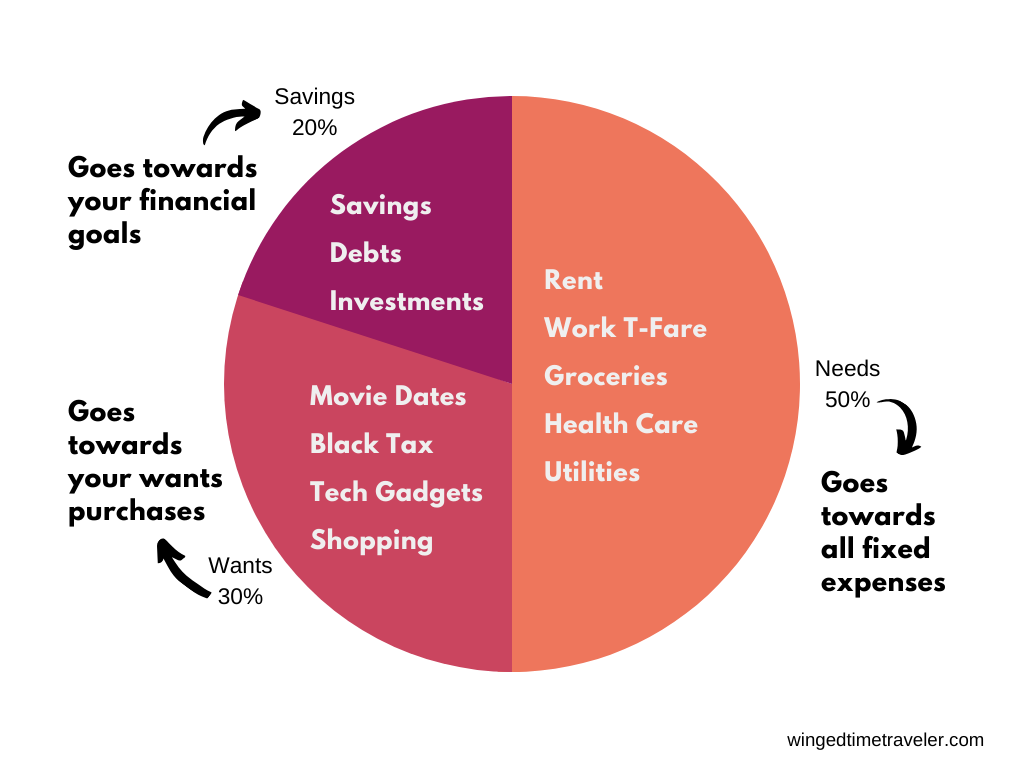
I started mindful spending with Google Sheets. Google Sheets has a budget template that I customized to my preference. With the 50/30/20 rule, I created a planning sheet that helped me organize my spending into different categories. 

50/30/20 Rule of Spending/ Saving Mindfully - Winged Time Traveller
50/30/20 Rule of Spending/ Saving Mindfully

The 50/30/20 budget rule states that:

  • 50% of your net income should go to your Needs, e.g. Fixed expenses such as rent, work transportation, health, bills, and utilities.
  • 30% of your net income should go to your Wants, e.g. Lifestyle or flexible expenses such as food, travel, shopping, and even black tax, etc.
  • 20% of your income should go to your Financial Goals, which includes all kinds of savings and investments.

The 50/30/20 rule is ideal for me because it’s helped me with simplifying and organizing my finances. With the planning sheet, I was able to see how much I needed for what, and how much I should be saving.

I have prepared a monthly budget template for August that you may want to customize to your preference. Click on ‘file’ to make a copy.

Download your monthly budget template now

Confronting Black Tax with Mindful Spending

In simple words, black tax is the tax every first child pays for being born.

As the first child of my family and the first grandchild on one side, I understand the responsibilities expected of me. Thinking about these responsibilities can be very overwhelming as you receive a text sometime in the middle of the month asking for money. You have a job, so nobody wants to hear you don’t have money. And heavens save you if they have an inkling of your monthly income. It’s okay to say you don’t have, but what about next month, and the upper month?

What I did was allocate some money for black tax under my ‘wants purchases.’ And in case the need is more than I budgeted, I wouldn’t do otherwise because I don’t have anywhere to unearth the money from, do I?

How do you measure what works with the monthly budget template?

As you spend and save, make every change in the sheet. At the end of the month, check back to see how much you’ve spent in the month. It’s okay if you spent more than you budgeted. The key is to take small mindful steps which in turn makes a big difference.

Make a copy of the sheet for next month with adjustment to your spendings. For example, if you budgeted N40,000 for food and you spent more than the amount you budgeted, adjust the expense for next month to the amount you spent this month and follow from there.

If you spent below the amount you budgeted, make the same changes.

I hope you’ve enjoyed reading this as much as I enjoyed writing it. Please fill out this 1 minute survey if you downloaded the monthly budget sheet. I’d love to follow up with you to make sure you find the budget template helpful. Don’t forget to follow my blog so that you don’t miss any blog posts from me. Also, remember to share with that friend who needs this most. Thank you.

Categories
Work

Do You Have a Brag Book?

I haven’t always been my biggest cheerleader. I suffer from impostor syndrome, which I’m beginning to learn happens to the best of us. My colleagues would be quick to tell me how much of a hard worker I am. 

But the thing is, I don’t give myself enough credit. I hear the voices of the internal critic in my head loud and clear every time I strive to do my best at a job. 

The thoughts that run through my mind whenever I’m working on a project with a team make me doubt the effort I give, and often when they need my contribution to an idea, the critic who lives within me guffaws. The only thing that’s helped bolster my confidence before giving a presentation or during my performance review is having my brag book with me.

It doesn’t help, especially during this COVID-19 period when there’s no clue about what the future will look like, or if there’s still anything like tomorrow. I mean, what use is a plan when you’re not sure if you’re going to survive Coronavirus?

Here are some of the things I’ve learnt from using my brag book

  1. I’ve learnt that if the thought runs through your head about whether you deserve a position or a responsibility, then you truly do. Nobody deserves this position better than you, and if there was such a person better than you for that job, why isn’t this person in the seat?
  2. I’ve learnt that it’s okay to toot our own horn. If you don’t, nobody might, and it’d remain like that until somebody does, which might take forever to happen. People forget things, and who’s better at telling your stories than you do?
  3. I’ve learnt to walk into a performance appraisal meeting with my brag book. It’s okay to reach for the note when you’re not feeling worthy of being in the room. More than twice, I looked through my brag book, and it helped me remember something that helped me with getting my confidence back.
  4. I’ve learnt not to wait until I complete a project or until a boss pats me on the back before adding my little wins to my brag book, after all, that’s why we call them ‘Little wins’.

My brag book is a place where I enter every little detail of what made me happy at the moment with my job or something that I thought I couldn’t do, but I did. One could call it a little memoir of wins. Like, the time I wanted to go for a run, but my body was pulling me back. Running for seven minutes made me feel happy with myself, and that’s something for a brag. Once, I took it upon myself to work on developing a tool that would make the project management swifter for the team. Having that initiative and starting was a win for me. I added it to my brag book. 

Sometimes, I go through my brag book and marvel at the things I let myself do. I’ve dabbled in a lot of things quite alright, but the truth is, I took the step, and I covered the grounds. Looking back, there’s only so much I could do, and I did those things. 

Having a brag book would help so much in a time like this. COVID-19 has made it very easy for the mind to fall into thinking traps that make us doubt ourselves even more. During this period, reading our brag books would go a long way in uplifting our spirits and helping us see why we were chosen for a particular role, and why we deserve every good thing in life.

Do you have a brag book? Could you share what you’ve included in it and how it’s helped you?

Update as of February 19, 2023: I’ll be creating another post soon that expands on the topic of this post. It will include inspirations on ‘how to create a brag book.’ Stay tuned for the link!