Categories
Product Work

I Built the App I Always Needed

In May 2020, I wrote a blog post on brag books.

That post was, for me, a reminder of how I started and where I was. I was dealing with a lot of imposter syndrome, and it felt comforting, albeit sad, to know I was not alone. Several people resonated with the post, wishing they had known about the concept earlier. I did not feel comforted that there was a community of people struggling with the same internal critic; rather, it was that I felt held by them.

However, this post is not about imposter syndrome.

It is about how something began to stir in me since that day. Yes, I had been using a brag book. In fact, let me take a little step back and give a big shoutout to my husband Shalvah Adebayo, who introduced me to brag books in 2019. At the time, we were dating and he had shared his brag book which was a document hosted on Dropbox. I replicated his template to guide me into my performance appraisals.

My brag book helped me walk into performance reviews feeling more confident. My manager at the time, Sarah Stanford, had commended me for always coming prepared and remembering, because according to her, ‘people forget.

The moment that changed things

Since that post in 2020, people started reaching out asking me to share my brag book template with them. I was using a spreadsheet for my brags then, so I duplicated and passed along.

From Dropbox to Google Docs to spreadsheets, to creating a folder in my iCloud to add screenshots of wins, feedback I had received, moments I was quietly proud of, to thinking: how do I make this more fluid? It felt all over the place. There was no structure to the entries. It became too tiresome to keep filling in a spreadsheet, and sometimes I did not have the capacity to record against the full STAR framework. What if I just wanted a quick entry?

The screenshots of recognition I received – the Slack messages, the emails, the shout-outs – were getting buried. I found myself trawling through old chats just to save them to my iCloud. I realised I was still doing most of the work manually.

I was happy to hear from friends who had started their own version of a brag book. I started looking for something better than a spreadsheet and a folder, but I could not find anything.

Then the idea began to form. Why don’t you build a proper something?

What I actually wanted

I wanted something that would:

  • Give me a proper framework for writing entries so they would be useful later
  • Let me capture screenshots of recognition without losing them
  • Organise everything in one place, without effort
  • Still be personal.

I could not find quite the right thing. So I built it.

What my BragBook is

my BragBook is a personal journaling app for capturing your professional wins and achievements.

It has three main parts.

The Brag Book is your journal. You can log entries quickly or use the STAR framework – Situation, Task, Action, Result, and Reflection to give your wins structure that holds up in a performance review or interview. Entries are organised by date, tagged by category, and searchable. You can star the ones that matter most.

The Capture screen is for recognition. Screenshots of compliments, shout-outs on Slack, kind emails from colleagues and clients. You upload the image, the app reads the text automatically, and you can add a brief reflection before saving it.

The Brag Board is where everything comes together. A curated view of your achievements – projects, recognition, skills – that you can export as a PDF or share via a private link. Think of it as a living CV. It’s always up to date. It’s always ready.

my BragBook is built on a simple belief: self-documentation is self-advocacy. If you do not record it, you cannot tell the story. And who is better at telling your story than you?

The Agama lizard

Ngwere si n’elu daa, legharia añya si ebe onweghi onye toro ya o kwe n’isi, si ka ya too onwe ya.’

Igbo Proverb

There is an Igbo adage that became the philosophical anchor for this whole thing.

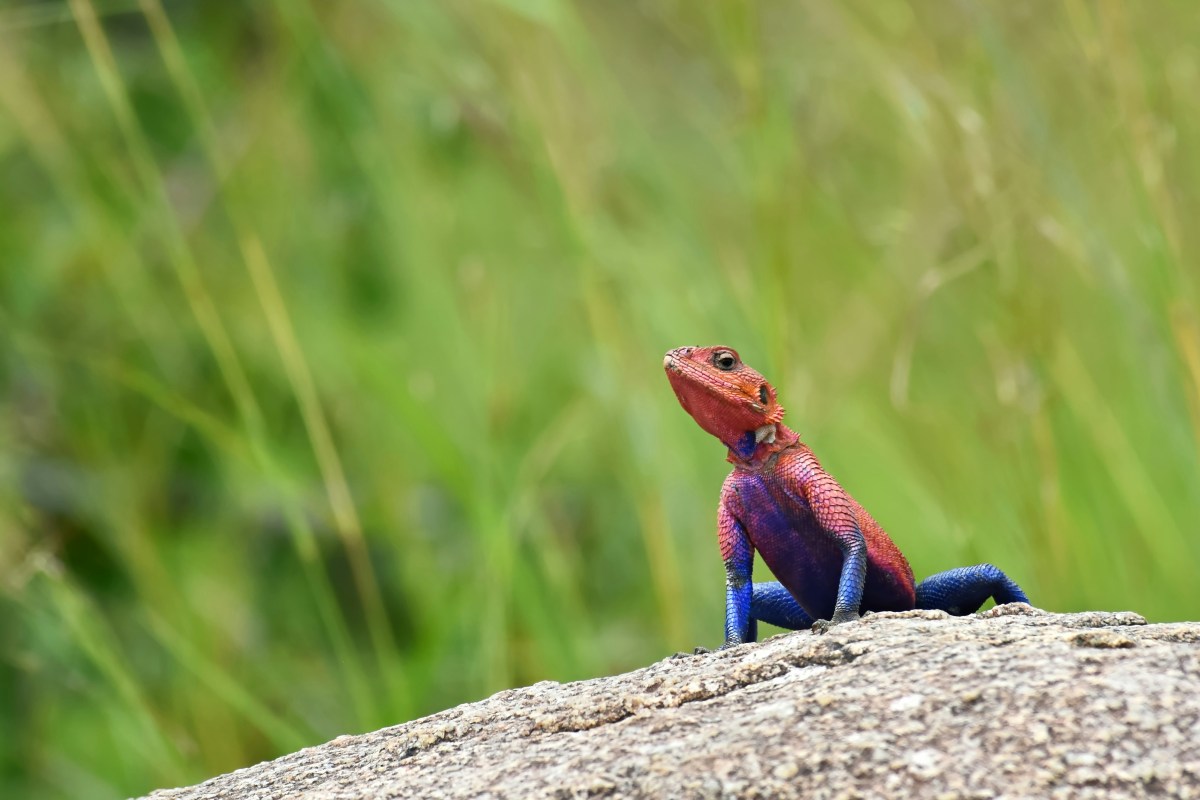
‘The Agama lizard fell from an Iroko tree, looked around, and saw that nobody said a thing. Nobody was watching. It nodded its head and said, “If nobody praises me, I will.“‘

I have discovered that there is a real discomfort around the word ‘brag,’ because it can feel boastful. The point of the app is to reclaim it. You should not be ashamed of the work you have done. This is not about arrogance or performance. my BragBook is rooted in the quiet acknowledgment of self until you are ready to share it. What this means is that the act of acknowledging your progress is necessary, because you were there, you did the work, and you deserve to remember it. You only share when you are ready to share, and there is no way that is shameful. You can share with a recruiter, your manager, or anyone else.

Because we’ve come this far

Building this was not easy.

There were months where it felt too complicated, too ambitious for a side project, too far outside what I thought I was capable of. There were decisions I second-guessed. There were things I built and then rebuilt.

But I kept coming back to that post. I had even added a note in 2023 saying I would be writing another post on how to create a brag book. To everyone who commented, thank you. You gave me a reason to keep going with this.

Who my BragBook is for

my BragBook is for women, men, people of colour, new career starters, and immigrants in professional spaces. People who are statistically more likely to understate their achievements, more likely to face the double bind of self-promotion, and less likely to have advocates in the room doing it for them.

It is for anyone who has ever:

  • Sat in a performance review struggling to remember what they did all year
  • Received a compliment they immediately dismissed or forgot
  • Updated their CV and realised they had no specifics, just vague descriptions of responsibilities
  • Felt like they had nothing to show, despite knowing, deep down, that they had done a great deal

You have to be your own Agama lizard. my BragBook is the tool that helps you do that consistently.

Where to find it

my BragBook is available on iOS and Android, and on the web at mybragbook.app.

If you start using it, I would genuinely love to know. Please drop a comment below, or find me wherever you find me. You know where I am.

And if you have been keeping a brag book since 2020, however messily, however inconsistently, I hope this gives it a proper home.

Your wins deserve to be remembered.

🤍 Ifunanya
Categories
Becoming Failing well Mindfulness

A failing well series #1: Running

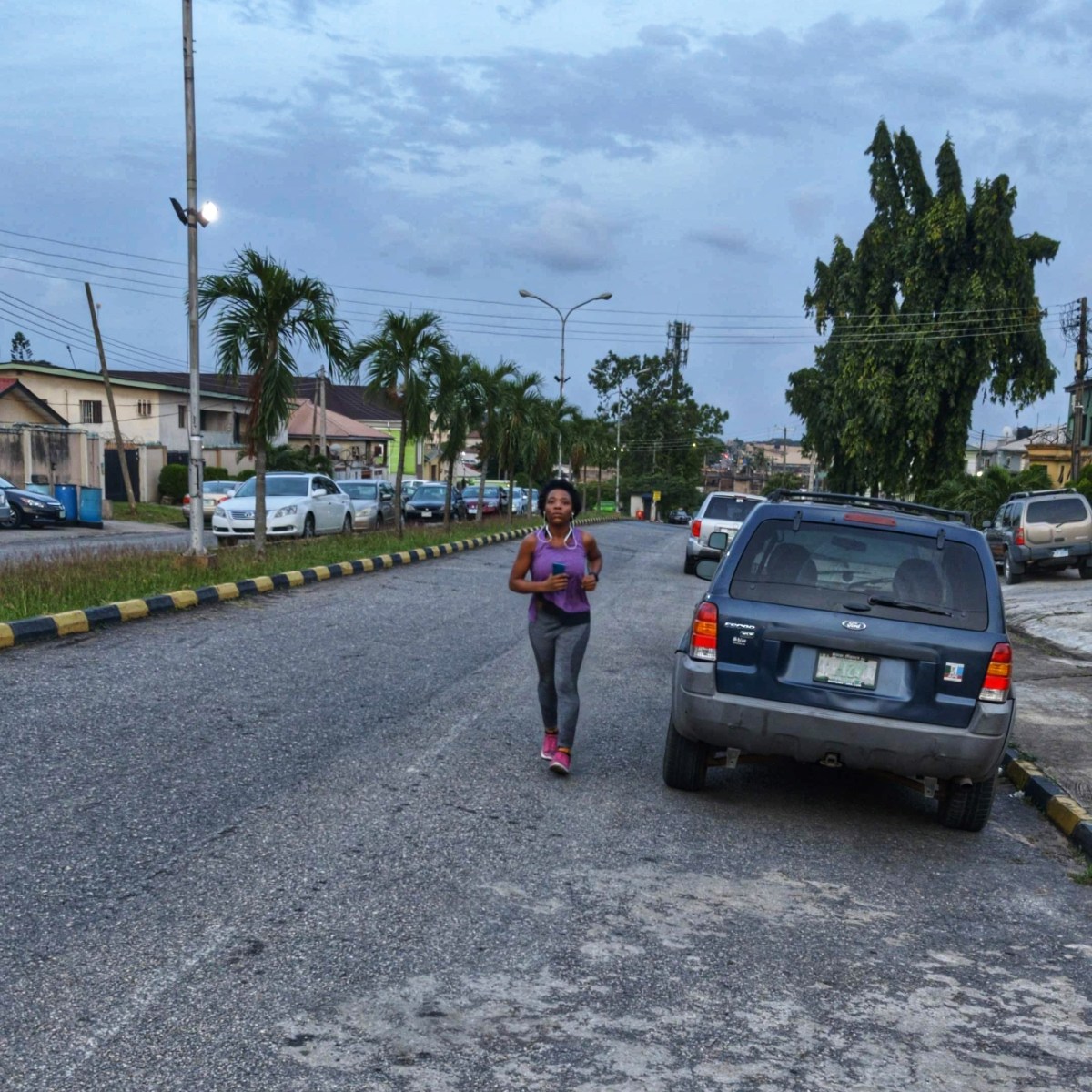
I will start by telling the story of how I started running – a sport I detested with all my might, how I have come to see myself as an athlete, and how I have grown to enjoy and see running as a beautiful sport. I will start with a running story because Abi Booth’s running story was what inspired me to start this series.

The Fear

When it came to exercise, I was a scaredy-cat. I thought exercise was for a particular set of people – that some people came with an innate desire to want to stretch, while some were not.

I had this mindset in secondary school during Physical education (PE) classes. PE was compulsory, and it also served as a punishment for latecomers and delinquents. Instructors asked offenders to run around the school field many times — an activity that left one breathless and gasping for air. I knew many people who fainted on the playground, and I knew people who came out tops — this further implanted the idea in my mind that exercise was for a selected few. My school chose the ones who did well to represent the school, but I did not come close to coming first, and I did not even come last. I was part of those who stumbled on the way. I did not understand why they made you do PE in school. What was I going to do with it?

The beginning — A little story about my grandmother and how her death moved me to run

My grandmother’s illness started in 2015. I remember coming home from my final exams in school to meet her sick. I remember the scary feeling that things were not going to remain the same. Grandma was present, but oblivious to what was happening around her. She did not know when I came in until someone told her, ‘Look, mama, It’s Ify. She’s here.’ And she smiled. A smile she has always reserved for me, her first grandchild. I asked what was wrong, but she could not make a clear sentence. It did not make any sense to me how someone’s body could, all at once, start failing them. 

From there, it led to many trips to the hospital, to her not being able to make coherent sentences, and to us having to feed her. She stopped walking, and we got her a wheelchair.

I don’t know what happened to my grandmother, but I remember a strong woman who instilled values and discipline in her grandchildren. I remember a hardworking woman who started taking care of my siblings and me when my mother died in 2008. My grandmother resumed parenting again when she was supposed to be retiring, and this meant she started worrying over what we were going to eat, how we were going to go to school. It was hard work 201. She went from a hale and hearty person to an invalid. She could not walk to the toilet or bathe herself, and she could not feed herself. If the grandmother that I knew could see herself in that state, she would have thrown a fit.

The last time I saw my grandma was in December 2020, when I visited her in a hospital in Ogun state. She had become a complete ghost of herself. She’d developed a brain stroke two nights before, and was plugged to a support machine. She could not tell it was me. 

On March 2, on my way to the grocery store, I received an SMS from my little cousin that announced my grandmama’s death.

I had many questions – How could someone suffer this much for so long? What was the purpose of the human body? Where did things go wrong? Would I suddenly fall ill too?

How I started working out

“Our bodies were made to move.”

“Globally, around 31% of adults aged 15 and over were insufficiently active in 2008 (men 28% and women 34%). Approximately 3.2 million deaths each year are attributable to insufficient physical activity.”

WHO – Physical Inactivity: A Global Public Health Problem

I started exercising out of fear of what would happen to my body if it ever breaks down. I had a scare once when I tried reaching for something underneath a couch in my grandparents’ house, and I felt a cramp build up in my upper back. However, my grandmother’s death was what incited the fear in me and spurred me into action. 

The fact that I did not understand what happened to her made things worse. She did not live a sedentary lifestyle because she was the most hardworking person that I knew. She always had lots of stuff to do – If she was not going to the market, she was on the farm, and if you did not find her on the farm, she was attending her peer meeting. I have also wondered if she died as a result of extreme stress. Whatever it was, I decided to become more mindful of the things I did. I started meditating, and I started running.

An attempt at running: The first try, my next run, and the lessons

I did not make it up to 3 yards on my first run before I started panting.

There were days when I would get tired and could not make it to the distance that I wanted, and there were days when I would end up in my running gear without going for a run. I’d love to get to a point where I can comfortably run three times a week. The last time I ran was yesterday, and before that, was my run on Friday. However, I believe I am making good progress.

I love going on the guided runs on Nike Run Club (NRC) with Coach Bennett.

One thing I have learnt from running with Coach Bennett is understanding that it is okay to run at a feel-good pace. He says, ‘Every run has a purpose.’ It is better to run for a shorter distance than aim for a higher one and end up feeling disappointed. ‘End the run wanting to run more,’ he says. The first run is all about wanting to do the next run.’ It does not matter how many times you go on the first run or the next run as long as you run at a comfortable pace.

Another thing I have learnt from Coach B is that it is crucial to always listen to our body. Our bodies are always telling us something, and we have to pay attention to be able to hear it. Running is fun as long as we make it fun. If your body wants a 1-minute run, take it for a minute run. If it wants to rest, let it rest. I always run solo because it helps me focus on my training and what I want out of the run. I am not sure I can run with other people, but I am willing to give it a try. 

The road to orange level

As a new runner, I would recommend Nike Run Club, as it is what has helped to build my confidence and get comfortable running. I am not sure I would be writing this if I had not given NRC a try. 

When I run, I feel the need to move. Sometimes, I don’t understand if I am running from something or towards something, but I feel my adrenaline pumping and pushing my body forward, and this beautiful feeling is what inspires me to keep running – understanding that I can get my body to move. 

Every time I go for a run, I keep learning new things about this sport, and I am always amazed at the things my body can do. There is so much to learn about my body, and I am here for all of it. I am glad I took the initiative to start running, and I am also happy that I overcame my fear.

Categories
Becoming Failing well Mindfulness

A failing well series: Intro.

The best of us is not trying to be perfect but to know that it is okay to accept the lessons as they come to us, especially when they do not come on our terms.

Alexei Orlov on Failing Well

I am joining Abi Booth in his ‘failing well’ series, a series he started, to expose himself to what it means to fail. I will be sharing stories of how I intentionally participated in stuff that I wasn’t good at, my experiences, and my lessons from failing. This exercise would help me get to know me better, and also help me understand my reactions to ‘failing.’

What does failing well mean?

Failing well means intentionally using every stumble you encounter on your path as a component towards learning. In failing well, you celebrate your mistakes, and you look into your struggles, pick up understanding and knowledge, and you come out a better person. 

I remember how I had cried my eyes out when things had not gone according to plan at work. This experience, among many others, has taught me how very intense and passionate I can be with what I do, and how having anything less than perfection had seemed like failing to me. 

I keep teaching myself that I don’t have to be perfect here, hence, with this exercise, I want to mindfully throw myself into the deep end and explore things that I am not comfortable with doing. I will go to places that I haven’t let myself go to, and I will learn how well I can handle mistakes and how I’d react to letdowns and stumbles down the road. This will be very intentional as I am going to be writing all about my experiences doing these things in my part of the ‘failing well’ series. You can join in and tag me when you do!

Here’s to having fears and conquering them. Here’s to failing well. 🍷

Categories
Failing well Reflections

Oh, but if you never try, you’ll never know

I moved into my new house at the beginning of July, and I’m still settling in. It’s a new city, a beautiful space with new challenges that I didn’t think to expect. I had been planning this move since December 2019, but it had not been successful – what, with the enormous demands from property owners in Lagos who prefer to have an empty space over letting their property to a single career woman? But this is a story for another day.

I’m not sure what mental space I was in when I shared that tweet, but I could make guesses. The items on my todo list? – Projects that leave me sleepless on many occasions at night, or the thought of having to start writing all over again? I let these thoughts consume me, not because I felt I couldn’t take them on, but because sometimes, I felt the weight too big to manage. Where could I possibly start?

1. Don’t let your fear drive you to the point of exhaustion.

If there’s one thing I’ve learnt about fear, it is that fear should be the fuel that drives us to do the things that we’ve always wanted to do. I think it is okay to be afraid. Our dreams can get too big that they frighten us, and yes, they should scare us – They should scare us into doing. I remember Shalv’s words to me on one of those days when we’d talk about fears. He said, ‘be careful not to let your fear drive you to the point of exhaustion, babe.’

Sometimes, we get too afraid that we end up not doing anything. I know this because I’ve been there. Thanks, Youper!

Since fear is not something we can control, we can decide how we want to use our fears to define our next course of action.

2. Vision boards are really helpful!

When I have an idea, I get so excited about it that I start talking all about it at once to my friends, and then the thought of how to execute it finally dawns on me, and that’s when it becomes frightening. Will this end up like other half-woven ideas?

One of the perks of working with creatives is you get to explore different ways of putting together your scattered thoughts. I learnt about using vision boards from working with Jana and Sarah.

Vision boards help you put together your thoughts using pictures and words. They really do work! First, you think about what you want – Your goals about the project, and you put them down. However it is, just put them down. I can hear Jana’s voice in my head – ‘Nanya, you don’t have to make it pretty. It doesn’t have to make sense right now. We’ll just go ahead to put them all down.’ And yes we did.

Visualisation is essential, and it helps you reduce all the fears and anxiety you had built up while your thoughts were still forming. Once you can visualise it, you can bring your dream to life. In this regards, I use Miro for brainstorming. 

3. Check if it’s on the list ☑️

Jana, my colleague, said during our hangout one morning, ‘checklists save lives,’ and I couldn’t have said it better.

I started writing again. First, I registered a domain name, then I created an account on WordPress, and wrote everything I wanted to write about in a checklist. All of these didn’t happen in a day.

If your dream frightens you, put them in a checklist and try to focus so hard on working on one item that you eventually get to check it off your list.

4. Do it.

Yagazie Emezi said ’The only way you can do it on your own is to do it on your own.’ I will borrow from her words to say, the only way you can do it is to do it.

I know many dream weavers. One of them is Shalv, who is the most consistent person that I know. I’ll tell you one. This amazing person sent me songs of the day, every day, for ten straight months without flinching. Or maybe he did, but the songs didn’t ‘flinch.’ He’s also the person whom I share my many ideas with, and he’d ask if I’d noted them down. With many projects of his own, which he’s done a great deal of work on, I can’t say that I’m not inspired.

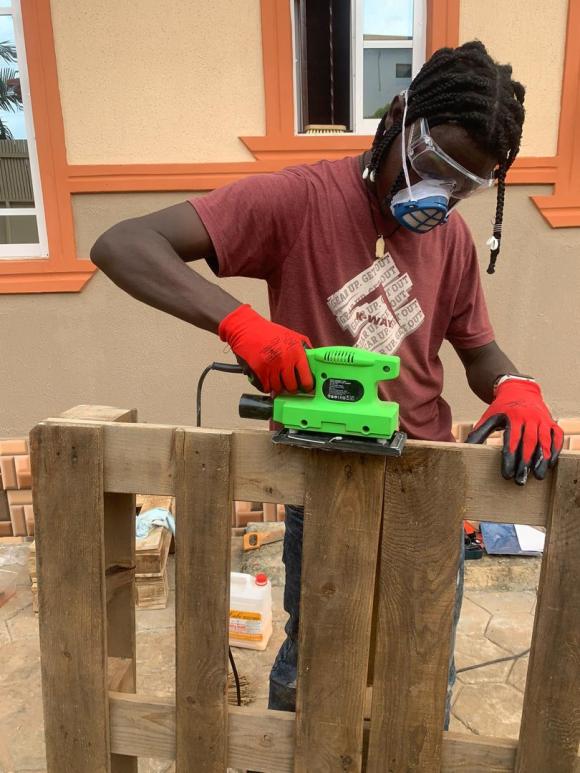
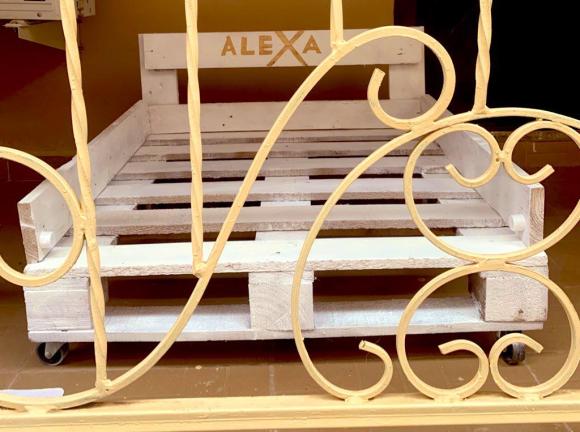
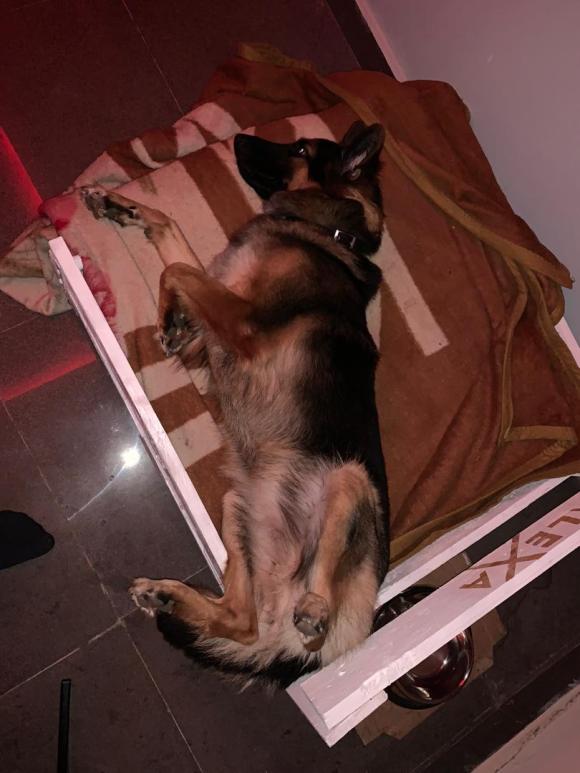
Another dream weaver that I know is my colleague, Biodun. He wanted a unique couch and a bed he saw on Pinterest. He would make a bed for himself and one for Alexa, his dog. And off he went to the market, scared of the uncertainty of how the finished work would be, but with heart thumping with excitement, he made a bed all by himself, for himself, and Alexa. I must admit that I’d doubted that it would come out okay, but the intensity with which he made these pieces of furniture inspired me. Alexa must have been proud when she saw her beautifully designed bed with bright led lights underneath and the inscribed letters of her name boldly written at the top of her bed.

To doing things afraid

Joyce Meyer said to do it afraid.

Fear! Has it ever been a problem for you, holding you back from moving into areas that could enrich your own life and the lives of others? 

Joyce Meyer, Do It Afraid.

Oh, but if you never try, you will never know. You will never know if you’ll do better as a writer if you never give writing a try. You will never know if you’ll make it to the interview stage if you do not submit your resume. If you don’t ask for that raise, how would you ever know that you won’t get it?

Because “everything we’ve always wanted is on the other side of fear”. We have to cross over, utilize it, channel it towards our passion, and then, we can have a great story to tell.