

I moved into my new house at the beginning of July, and I’m still settling in. It’s a new city, a beautiful space with new challenges that I didn’t think to expect. I had been planning this move since December 2019, but it had not been successful – what, with the enormous demands from property owners in Lagos who prefer to have an empty space over letting their property to a single career woman? But this is a story for another day.
I’m not sure what mental space I was in when I shared that tweet, but I could make guesses. The items on my todo list? – Projects that leave me sleepless on many occasions at night, or the thought of having to start writing all over again? I let these thoughts consume me, not because I felt I couldn’t take them on, but because sometimes, I felt the weight too big to manage. Where could I possibly start?
1. Don’t let your fear drive you to the point of exhaustion.
If there’s one thing I’ve learnt about fear, it is that fear should be the fuel that drives us to do the things that we’ve always wanted to do. I think it is okay to be afraid. Our dreams can get too big that they frighten us, and yes, they should scare us – They should scare us into doing. I remember Shalv’s words to me on one of those days when we’d talk about fears. He said, ‘be careful not to let your fear drive you to the point of exhaustion, babe.’
Sometimes, we get too afraid that we end up not doing anything. I know this because I’ve been there. Thanks, Youper!
Since fear is not something we can control, we can decide how we want to use our fears to define our next course of action.
2. Vision boards are really helpful!
When I have an idea, I get so excited about it that I start talking all about it at once to my friends, and then the thought of how to execute it finally dawns on me, and that’s when it becomes frightening. Will this end up like other half-woven ideas?
One of the perks of working with creatives is you get to explore different ways of putting together your scattered thoughts. I learnt about using vision boards from working with Jana and Sarah.
Vision boards help you put together your thoughts using pictures and words. They really do work! First, you think about what you want – Your goals about the project, and you put them down. However it is, just put them down. I can hear Jana’s voice in my head – ‘Nanya, you don’t have to make it pretty. It doesn’t have to make sense right now. We’ll just go ahead to put them all down.’ And yes we did.
Visualisation is essential, and it helps you reduce all the fears and anxiety you had built up while your thoughts were still forming. Once you can visualise it, you can bring your dream to life. In this regards, I use Miro for brainstorming.
3. Check if it’s on the list ☑️
Jana, my colleague, said during our hangout one morning, ‘checklists save lives,’ and I couldn’t have said it better.
I started writing again. First, I registered a domain name, then I created an account on WordPress, and wrote everything I wanted to write about in a checklist. All of these didn’t happen in a day.
If your dream frightens you, put them in a checklist and try to focus so hard on working on one item that you eventually get to check it off your list.
4. Do it.
Yagazie Emezi said ’The only way you can do it on your own is to do it on your own.’ I will borrow from her words to say, the only way you can do it is to do it.
I know many dream weavers. One of them is Shalv, who is the most consistent person that I know. I’ll tell you one. This amazing person sent me songs of the day, every day, for ten straight months without flinching. Or maybe he did, but the songs didn’t ‘flinch.’ He’s also the person whom I share my many ideas with, and he’d ask if I’d noted them down. With many projects of his own, which he’s done a great deal of work on, I can’t say that I’m not inspired.
Another dream weaver that I know is my colleague, Biodun. He wanted a unique couch and a bed he saw on Pinterest. He would make a bed for himself and one for Alexa, his dog. And off he went to the market, scared of the uncertainty of how the finished work would be, but with heart thumping with excitement, he made a bed all by himself, for himself, and Alexa. I must admit that I’d doubted that it would come out okay, but the intensity with which he made these pieces of furniture inspired me. Alexa must have been proud when she saw her beautifully designed bed with bright led lights underneath and the inscribed letters of her name boldly written at the top of her bed.
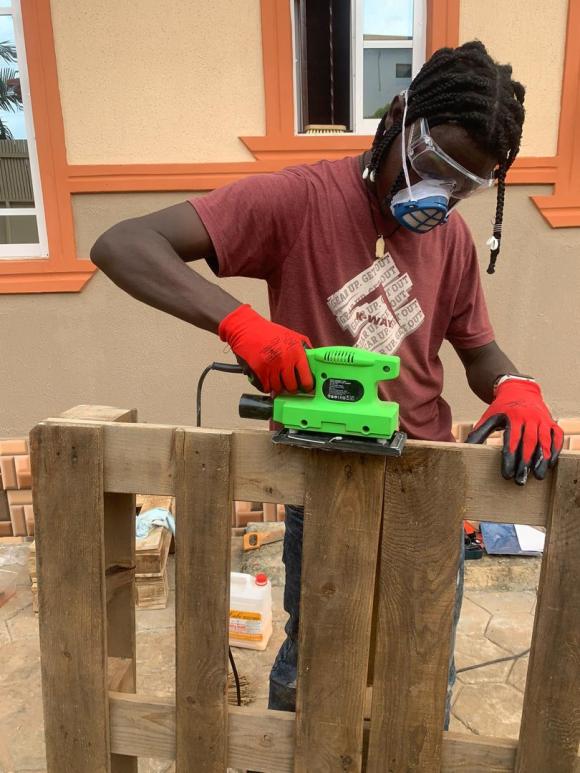


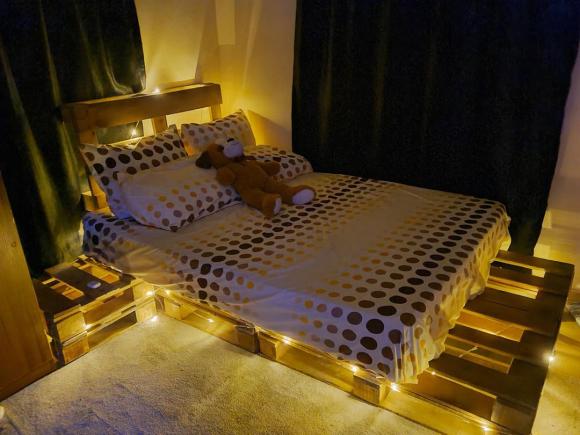
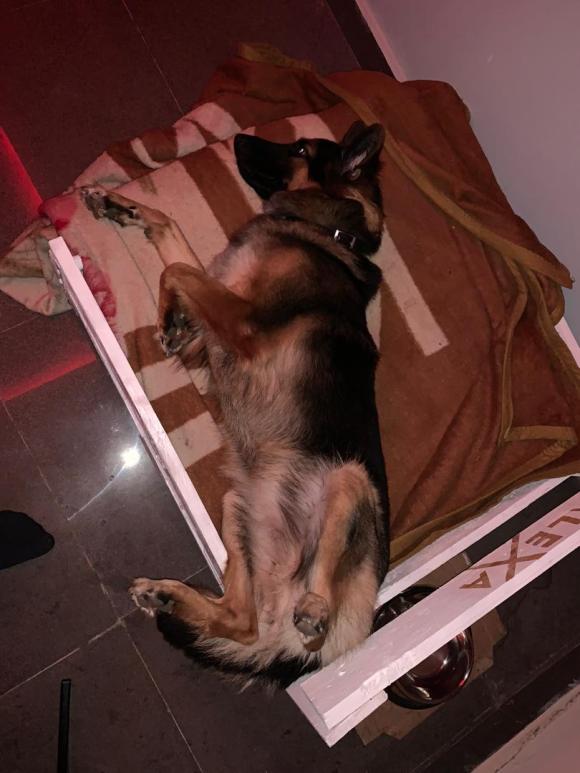
To doing things afraid
Joyce Meyer said to do it afraid.
Fear! Has it ever been a problem for you, holding you back from moving into areas that could enrich your own life and the lives of others?
Joyce Meyer, Do It Afraid.
Oh, but if you never try, you will never know. You will never know if you’ll do better as a writer if you never give writing a try. You will never know if you’ll make it to the interview stage if you do not submit your resume. If you don’t ask for that raise, how would you ever know that you won’t get it?
Because “everything we’ve always wanted is on the other side of fear”. We have to cross over, utilize it, channel it towards our passion, and then, we can have a great story to tell.
 The winged time traveller