When we say ‘forgiveness,’ we often forget that forgiveness should start from within. For us to forgive another, we must first forgive ourselves.
We don’t realise how much bitterness and resentment we hold within ourselves until we face a similar situation. Over time, this bitterness grows into fear, walls, and biases, making it challenging to embrace a different path. But to move on, we must first forgive ourselves.
To forgive ourselves, we must first acknowledge what happened. Sometimes, these mistakes are not ours to bear; however, because of the expectations we place on ourselves to be perfect, we fail to see past the current situation. We say to ourselves, ‘never again,’ and shut ourselves off. Because we never confronted the first situation, we may find history repeating itself as this bitterness grows deep and imprints itself into our hearts, creating burdens we need to release.
Years later, we become a product of our traumas, unaware that we hold these biases unless someone calls them to our attention.
Some years ago, my friend called my attention to a prejudice I held so tightly that I didn’t even realise it was there.
What are the beliefs we hold as truths that are actually prejudices?
Just because I’ve had similar experiences with people of a certain gender in the past doesn’t mean every individual of that gender will act the same way in the future.
What happens with biases is that when we hold on to them so tightly, we close ourselves off from a part of the world. In my case, any man driving a car who stops me on the road must want something more. I couldn’t believe I held on so tightly to this mindset, thinking it was the absolute truth. I even mentioned this to my sister on our walk.
How long had I closed myself from love, friendship, or connection because of this bias?
I wept when I finally faced the truth I had been trying so hard to avoid because I felt so guilty that I had to talk to my friend about it. I let myself cry for all the hurt I’d been holding onto; for not loving myself enough to realize that I needed to forgive myself, and for being rude to a stranger whose only crime was stopping me on the road to ask for my friendship.
What follows from here is love, lessons, forgiveness, and self-compassion; love and forgiveness that comes from within; lessons learned from the incident; and a promise to be more open-minded. In this experience, we remember to be kind to ourselves as we work on moving forward.
‘We are a product of our traumas,’ my friend, Biodun, says. ‘Our traumas shape us and make us who we are.’
Imagine we give ourselves time, love, and care to forgive ourselves, learn from our situations, and move forward. Imagine we acknowledge that it is not our fault that these traumas happened to us. And imagine we write the future with so much love bursting through us as a byproduct of the lessons we learned and the love we allowed ourselves to feel and produce when we didn’t let that incident define us. We become love, telling love stories with kindness, passion, and sincerity towards others we meet on our way.
Last December was a myriad of events, as we were all exhausted from the spike in ridesharing fees, congested traffic, and fuel shortage. On this day, we walked a long distance from our house to catch a bus at the junction and then walked even further from the bus stop to the hospital because it was during this time that my brother was ill. After seeing the good doctor, we walked a good kilometre to reach the next bus stop, and it was here that we encountered what was going to be our fate for the next few minutes.
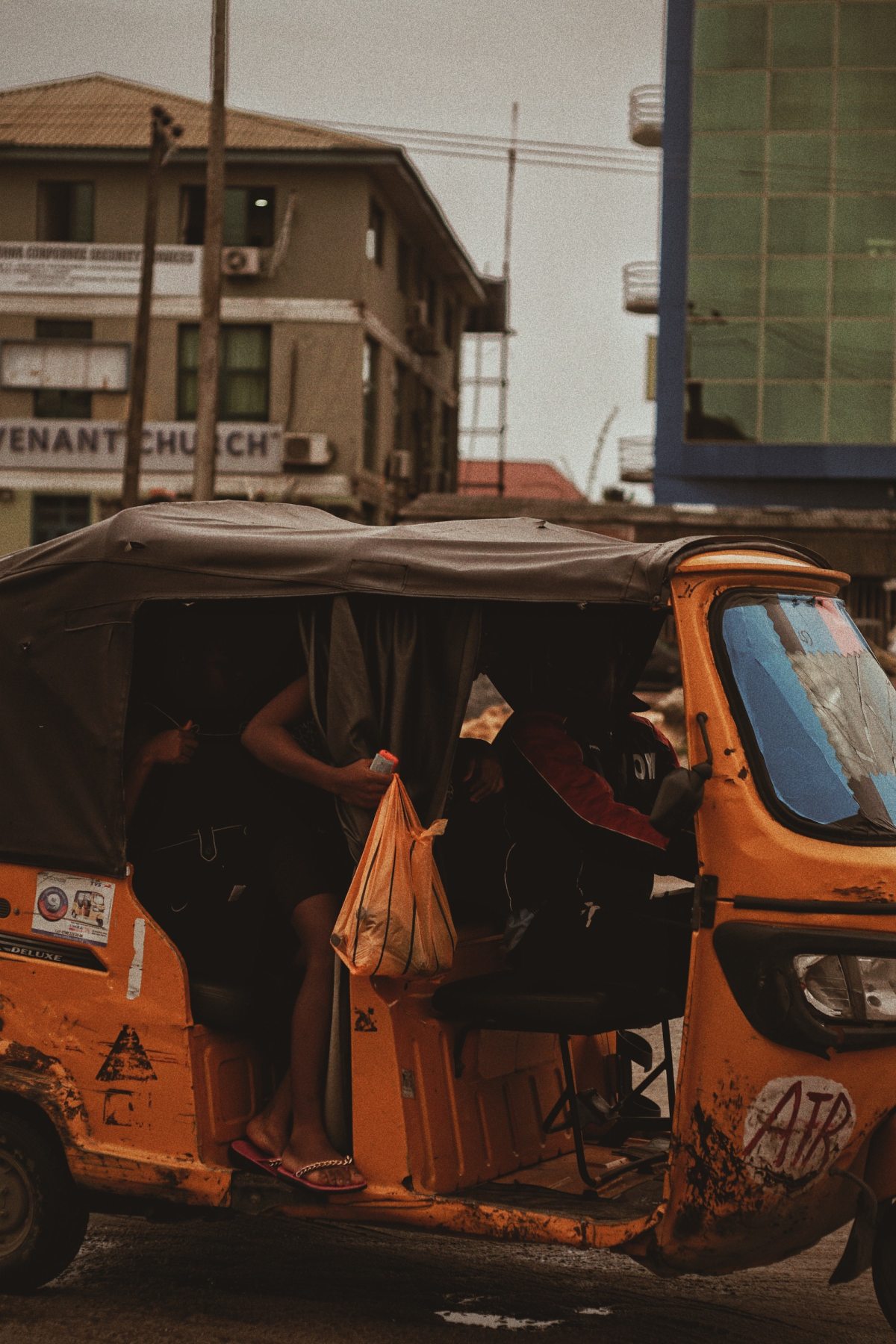
A keke driver appeared, as if by magic, with one passenger on board.
“Ojota!” we screamed in excitement, as it was almost too good to be true. Other buses that had gone by either needed only one passenger or none at all and many people were waiting at the bus stop. We were already on our way from the bus stop as we’d resolved to continue the journey on foot or if we were lucky, we’d find a suitable vehicle to take the four of us. We quickly got in as the vehicle slowed down. “Wole, (Enter)” the driver screamed in pidgin. “Enter sharp sharp, dem dey arrest keke for here! (Enter quickly, they’re arresting keke drivers here)”
We jumped in. My brother Newman and I got into the keke, followed by Bobo, who took the front seat. However, another passenger was already in the vehicle, and the seats were not going to be enough for all of us. The driver, acting as if he was in a hurry, instructed my younger brother Neche to sit on Newman’s lap. The driver had previously apologised for the inconvenience caused by the extra passenger, saying that the man would come down ‘up there.’
In horror, I blurted to the driver. “He’s sick, he can’t carry him.” I didn’t realise what I had said until the driver retorted in pidgin: “how I wan take know? My own na mek him enter, mek we dey go. (How could I have known? I’m only interested in moving this vehicle).“
Of course, how could the driver have known that we were just coming from the hospital?
Newman lapped Neche, and laughter bubbled up from within me, as I shook my head at my own silliness.
“Na true, you for no know. (That’s true. You couldn’t have known)” I responded in a voice that sounded almost like a whisper, in pidgin.
This was me in my element, surrounded by family, full of excitement, and almost forgetting to breathe.
After about two minutes, which felt like ten minutes, I heard the driver ask Newman for a rag behind him. I turned to look at the rag and noticed how dirty it was and wondered if I had my hand sanitiser in my tote bag.
But that was not what Newman was thinking. In fact, I was not privy to Newman’s thoughts until we got off the keke. The events that followed seemed like something that happened in movies. Because I later found out that Newman reached into his right pocket, pulled out his phone, and held it in his other hand before grabbing the rag for the driver from the booth.
Just before reaching the Coca-Cola roundabout at Alausa, the driver suddenly became manic. “Na for that hill I go drop una. I no dey reach Ojota bus stop o. If una want, I go drop una for here, give you change. (I will drop you people at that hill. I’m not getting to Ojota. If you want, I will stop here and give you your change.” In a calm voice, still oblivious of what had happened or was happening, I asked, “Which hill? I’m sure we can get off there.” Neche started to add in Igbo, “Ify, do you know that place where…”
Out of the blue, I heard Newman say in his calmest voice, “Ifunanya, don’t argue. Listen to me. Collect the change and let’s get off here.”
The manner in which Newman spoke caught my attention, and I listened without arguing, which was unusual for me, as I would typically argue with my brother. But, oh well, he called my full name, and anytime he does that, he means business.
We took the change and got out of the keke. The driver then quickly drove away with the other passenger.
Newman explained what happened then. The driver had used an “old scope” to try to distract him. When the driver asked Newman to grab the rag from behind him, the thought was that this would cause Newman to turn and thus be momentarily distracted, which would allow the other passenger the opportunity to try and steal Newman’s phone by slipping his hand into Newman’s pocket. However, Newman was alert and had noticed the passenger’s attempt to steal his phone because the phone was nearly half an inch away from his pocket then. The driver and his accomplice didn’t expect that Newman was familiar with the scope as pickpockets had tried this tactic on him in the past.
Then he asked. “Did you notice that the passenger was still in the keke even though the driver had said he was going to drop soon?”
This experience with my brother was another crucial step in my ongoing journey towards mindfulness. For days, I would reflect on this experience, as I had been oblivious of this side of my brother. As I applaud his ability to slow down in that moment of need, I also recognize how difficult it can be to stay present.
Last year, I became a member of Akanka Spaces—an intentional community of people focused on nurturing a mindset of love, backed by the framework of intention. This framework teaches that everything begins with slowing down, followed by gratitude and responsibility. Adopting this mindset has helped me become more intentional in my life, allowing me to approach situations with a greater sense of purpose and understanding.
Sometimes, we are fully aware of a moment, and other times, we only realise it when someone or something calls our attention to the present, and I wonder how many of such times I have failed to recognise such moments. My answer is ‘probably a lot of times.’
A lot of times, I find myself acting impulsively and absent-mindedly. Much to my detriment, this happens more often than I am proud to admit.
If we can slow down to be present in the moment, we can catch these moments before they slip away. Otherwise, we may find ourselves acting in ways that we may later regret.
Awareness of these moments is a rare gift, and my brother’s actions served as a powerful reminder of its importance.
Since that day, I have made a conscious effort to be more present in my interactions with friends and family. I have discovered that by slowing down to pay attention and be aware of the moment, I can better understand and support the people around me. This awareness has not only enriched my relationships, but it has also allowed me to grow as an individual.
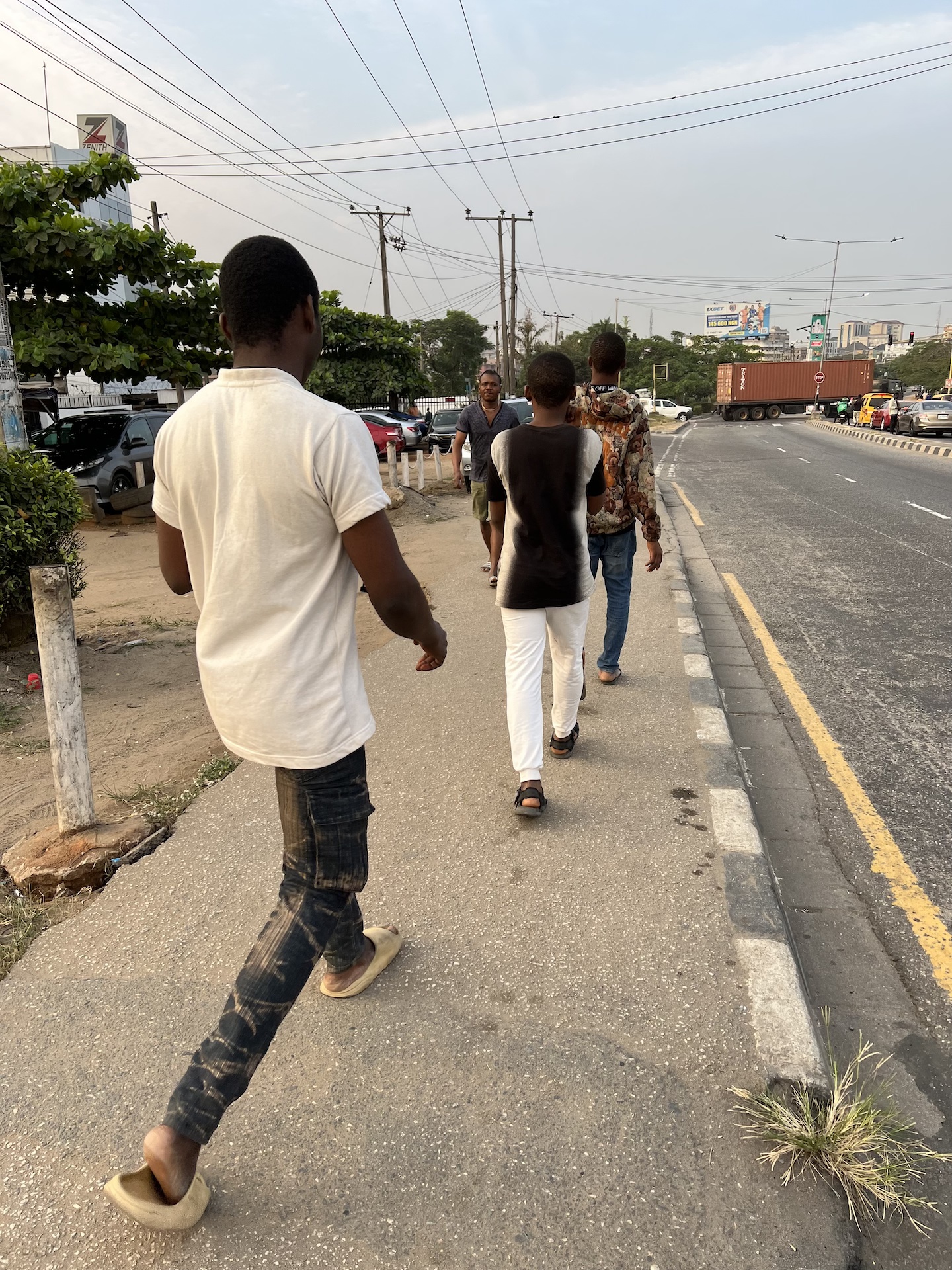
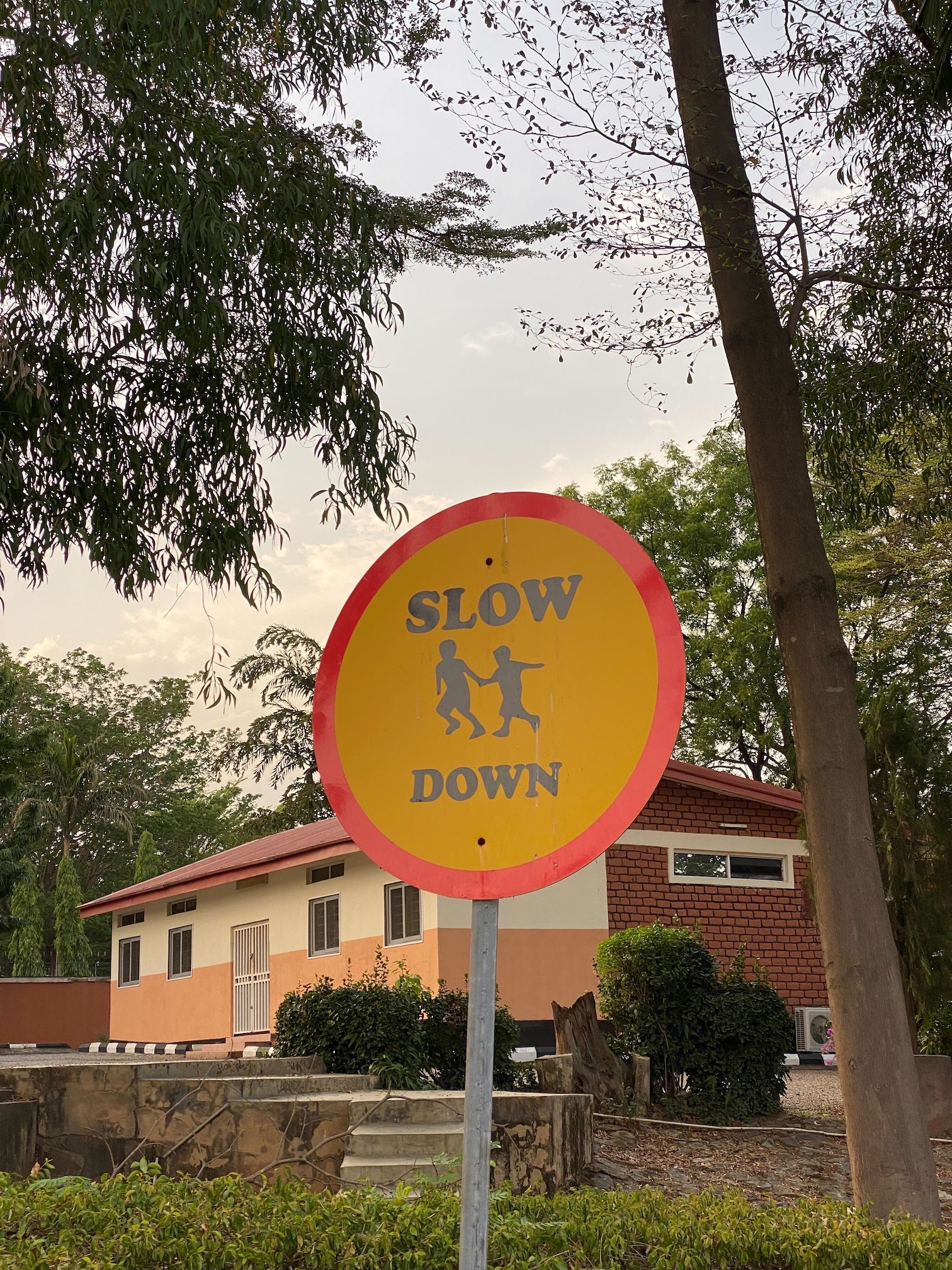
Newman, Chinecherem, and Bobo walking in single file after alighting from the Keke Napep, on our way to the next bus stop in hopes of catching a vehicle. I took the photograph.A ‘Slow Down’ sign photographed by Chine Ezeks
When I travelled to Ghana, I did not have a set plan of what I was going there to do or the places of interest to visit. My goal was to go to Ghana and see Mawuu. Perhaps, this lack of a plan was why I paid an expensive amount to reschedule my flight, as I had arrived late for check-in at the airport and could not move with my scheduled flight.
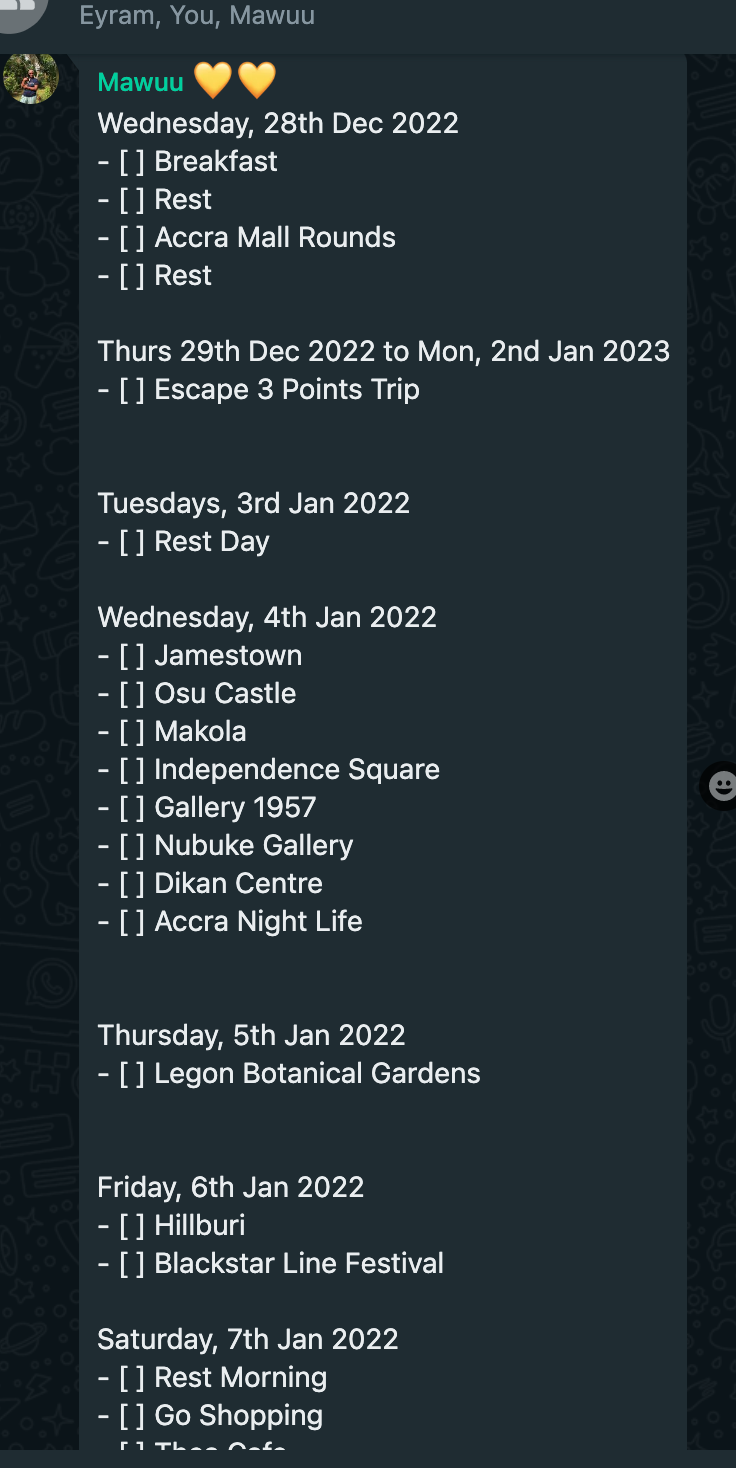
In the afternoon of the day I arrived in Ghana, Mawuu asked me if I had places I had planned to visit, and I responded in the negative. I was only going to meet with my colleagues later that day, and that was it. Oh, and then travel with the Travel Tribe to Southwestern Ghana; this was a plan that Mawuu had sold me when I told her of my plan to visit Ghana. As I bit into my brunch at Starbites Restaurant at East Legon, Mawuu drew up an itinerary on the spot for me and added me to a Whatsapp group with the subject – “Ify in Ghana.”
People gape at me in disbelief when I tell them this story of never having planned my Ghana trip. If only they knew that I had also borrowed the Ghana trip idea from my dearest friend, Doyin.
Initially, Doyin had shared the idea of going to Ghana to rejuvenate herself, and I welcomed the thought. Life was too short to overthink about doing something for oneself. My new ambition is to travel, and I would not waste time worrying about the details.
And when Doyin’s plan of travelling to Ghana changed, the thought of visiting Ghana stuck out like a sore thumb, that I could not shake off. Without further ado, I packed my bags and headed off to Ghana.
In Travelling Just For The People, Derek Sivers wrote of a friend who had travelled a long distance just to come and stay with him. When Derek asked if he had planned to visit any sights, he said No. “I don’t care what we do. I just came to see you!”
Bewildered, Derek probed him further, and he replied, “Dude. I’m serious. I really don’t care about any of that stuff. I came here to see you, hang out with you, talk with you. That’s honestly the only reason I’m here. You don’t have to take me anywhere or show me anything.”
Reflecting on that experience, Derek wrote, “I remember almost nothing but that conversation. Sometimes we connect with a place, but usually we connect with people. Yet people connect us to a place.”
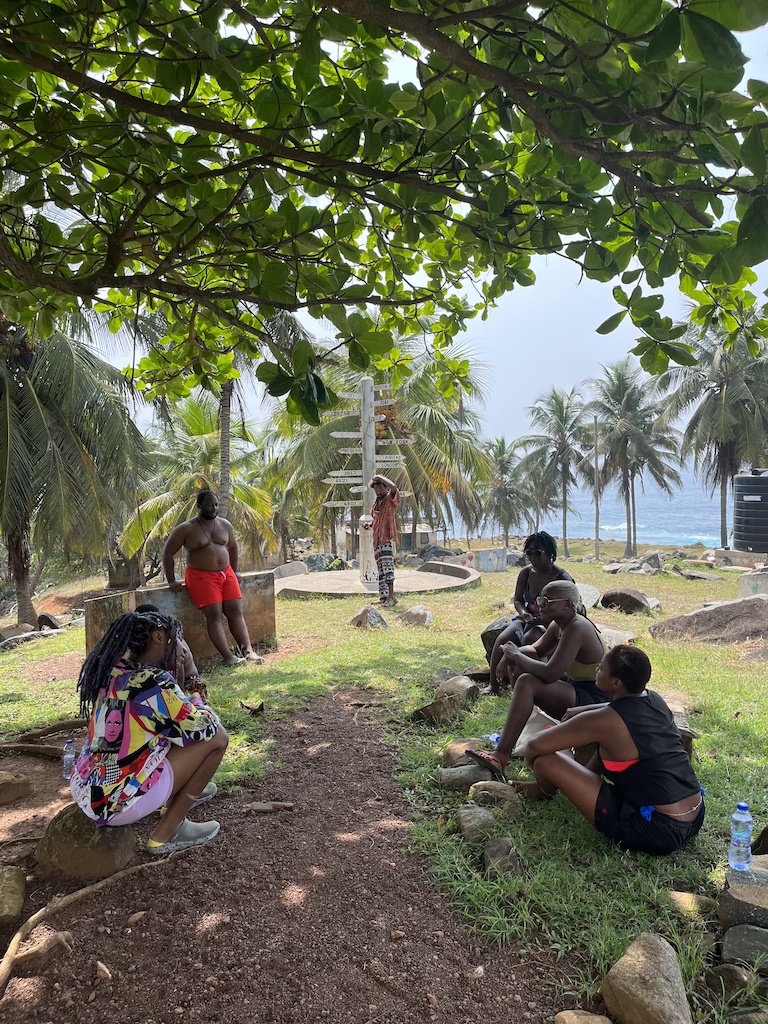
Yes, people connect us to a place. My journey in Ghana crystallised at the airport – meeting Mawuu for the first time and Eyram for the second time – two lovely people whose souls introduced me to the heart of Ghana. This meeting would define the rest of my journey in Ghana, for when I think of this meeting, I think of old friendships and new beginnings, of laughter and warmth, of the vibrant colours and sounds of the people in closed spaces, and of the kindness and generosity of the people I would meet along the way.
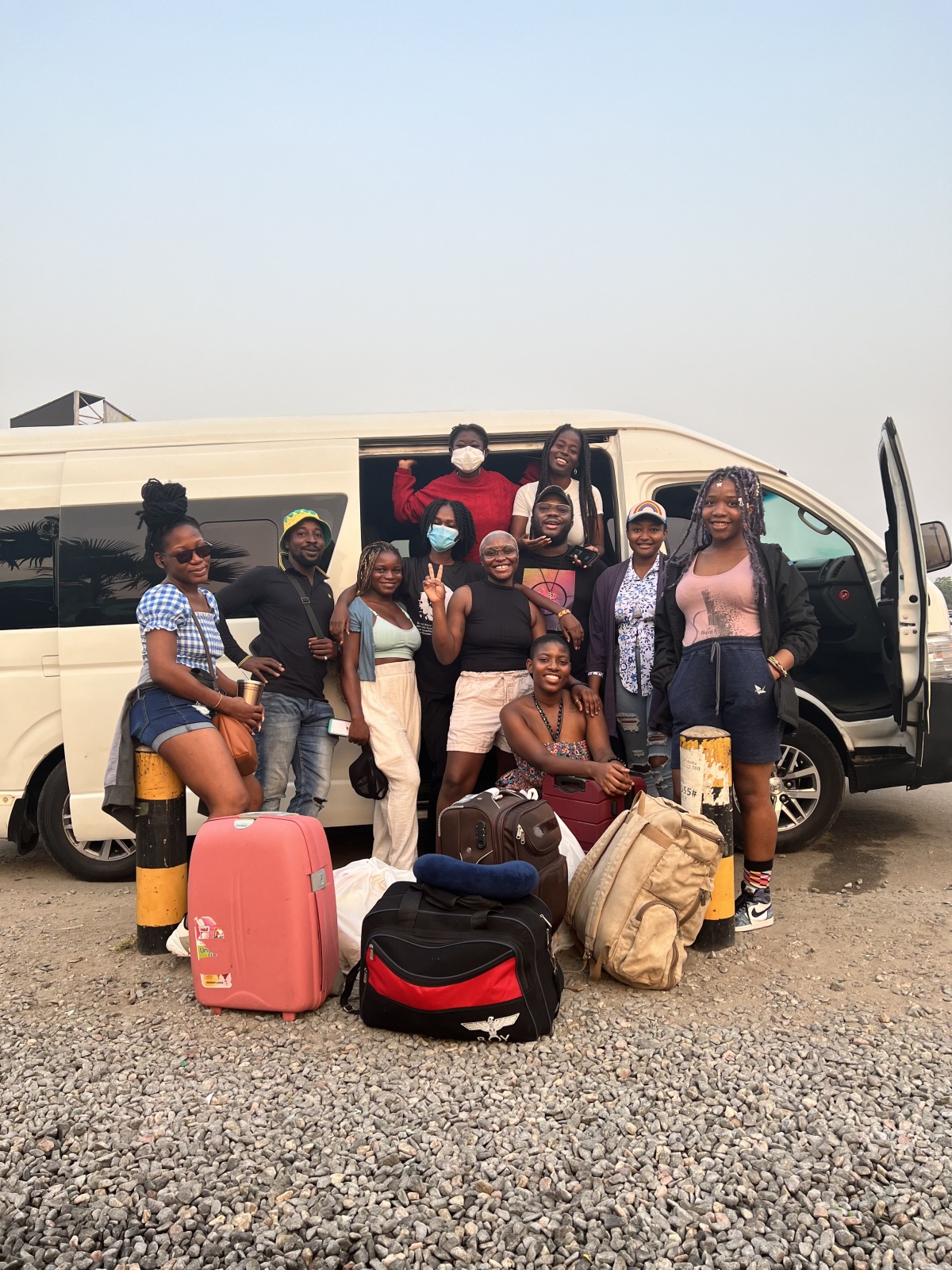
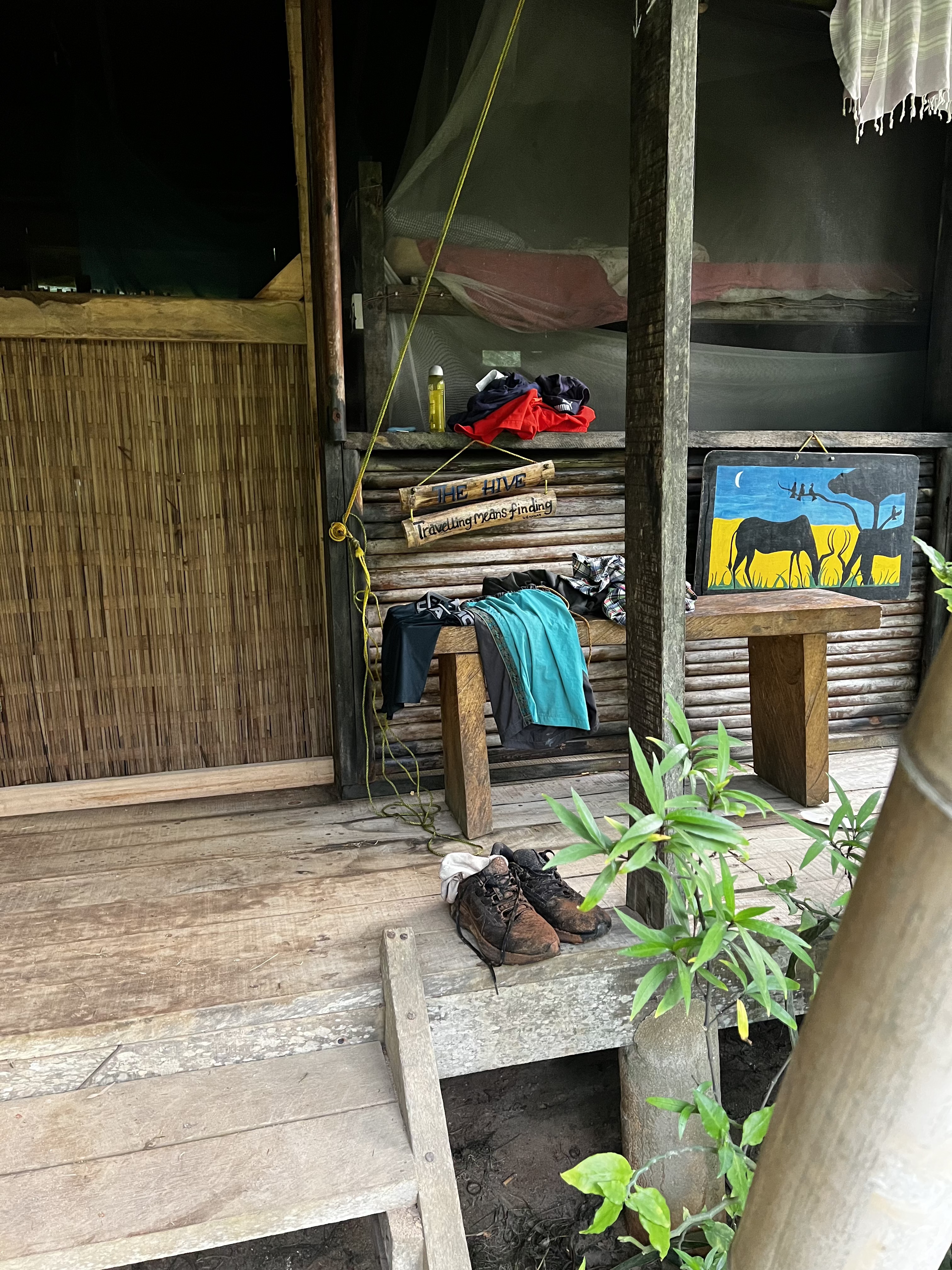
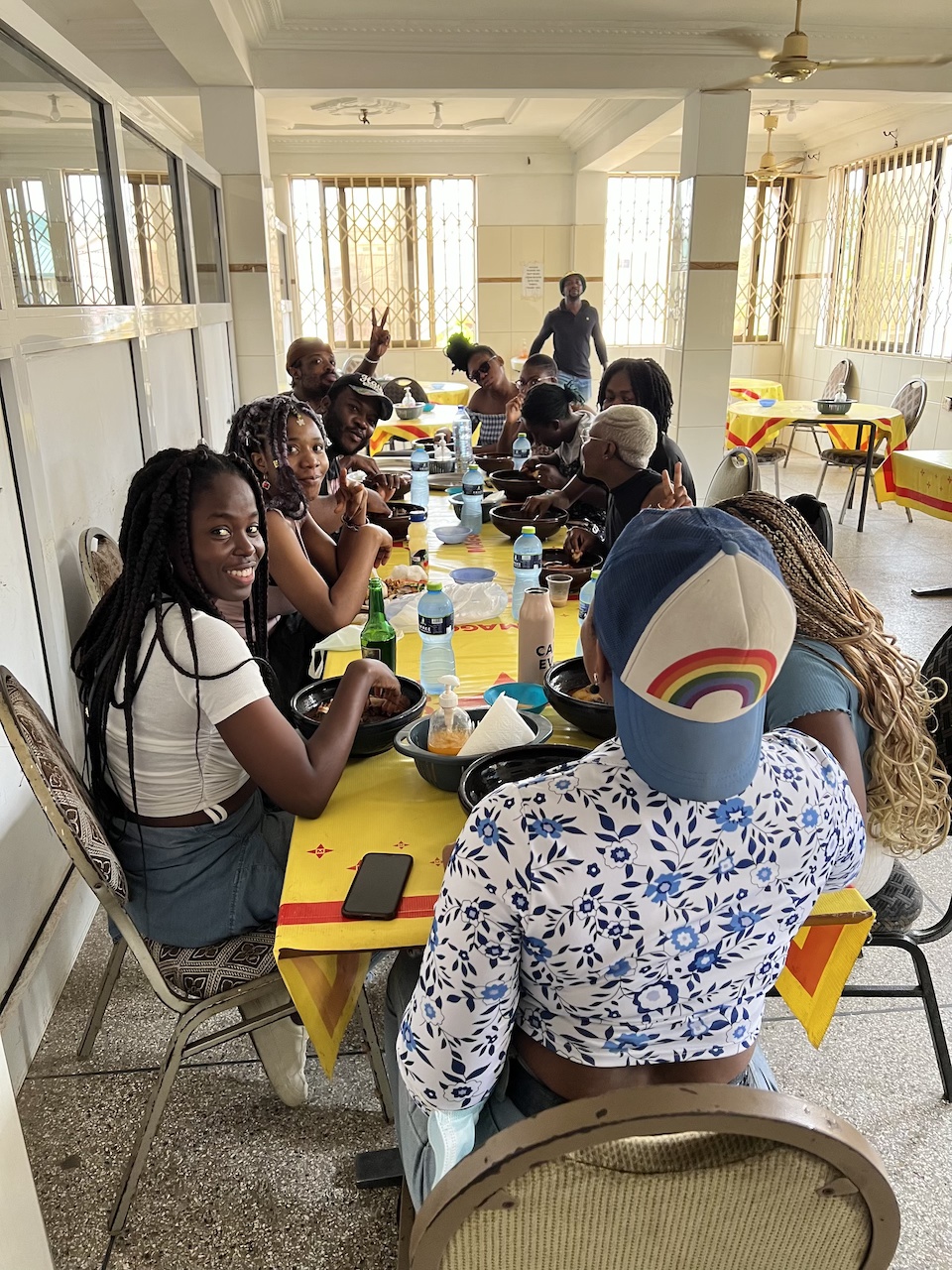
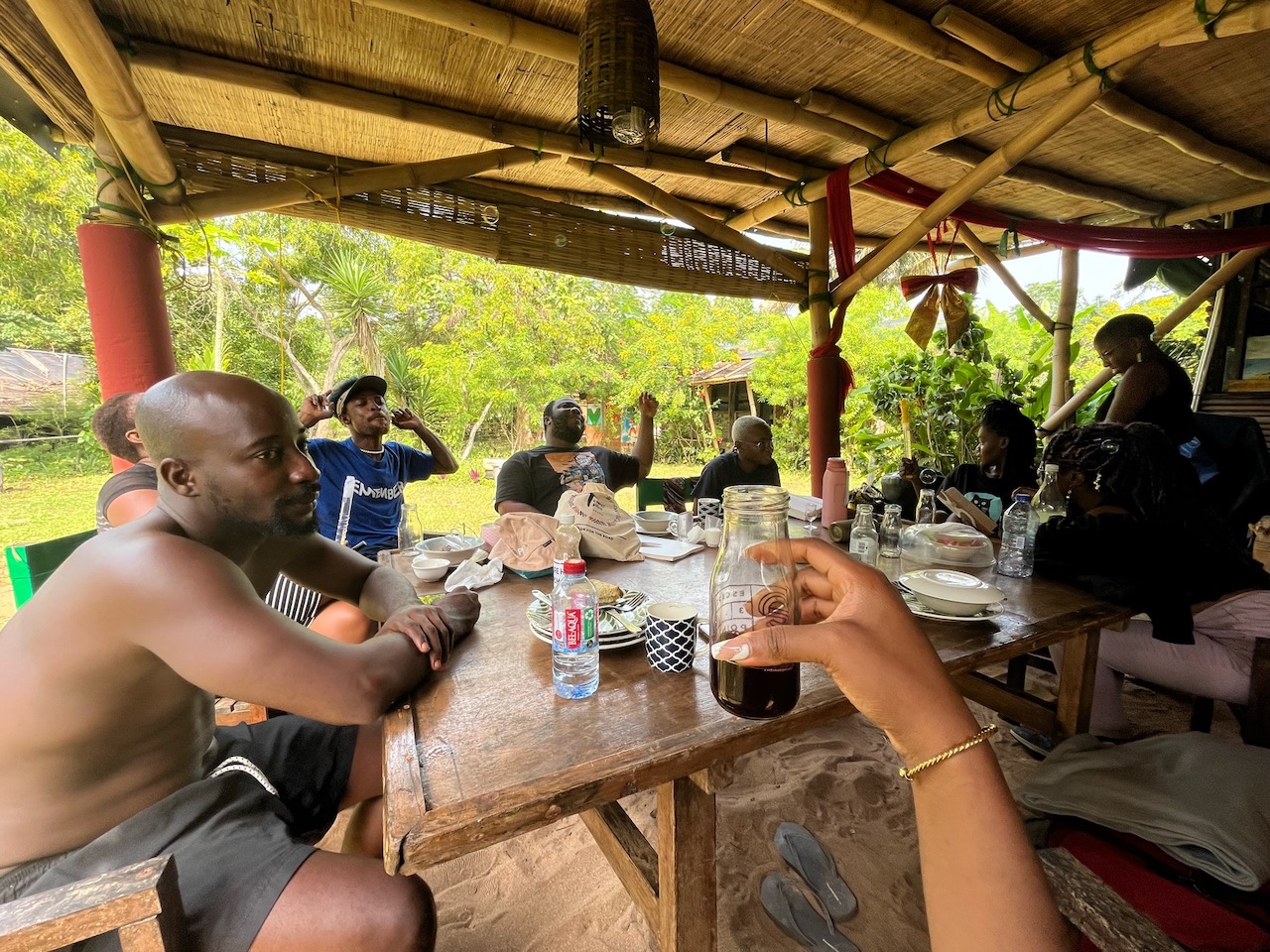
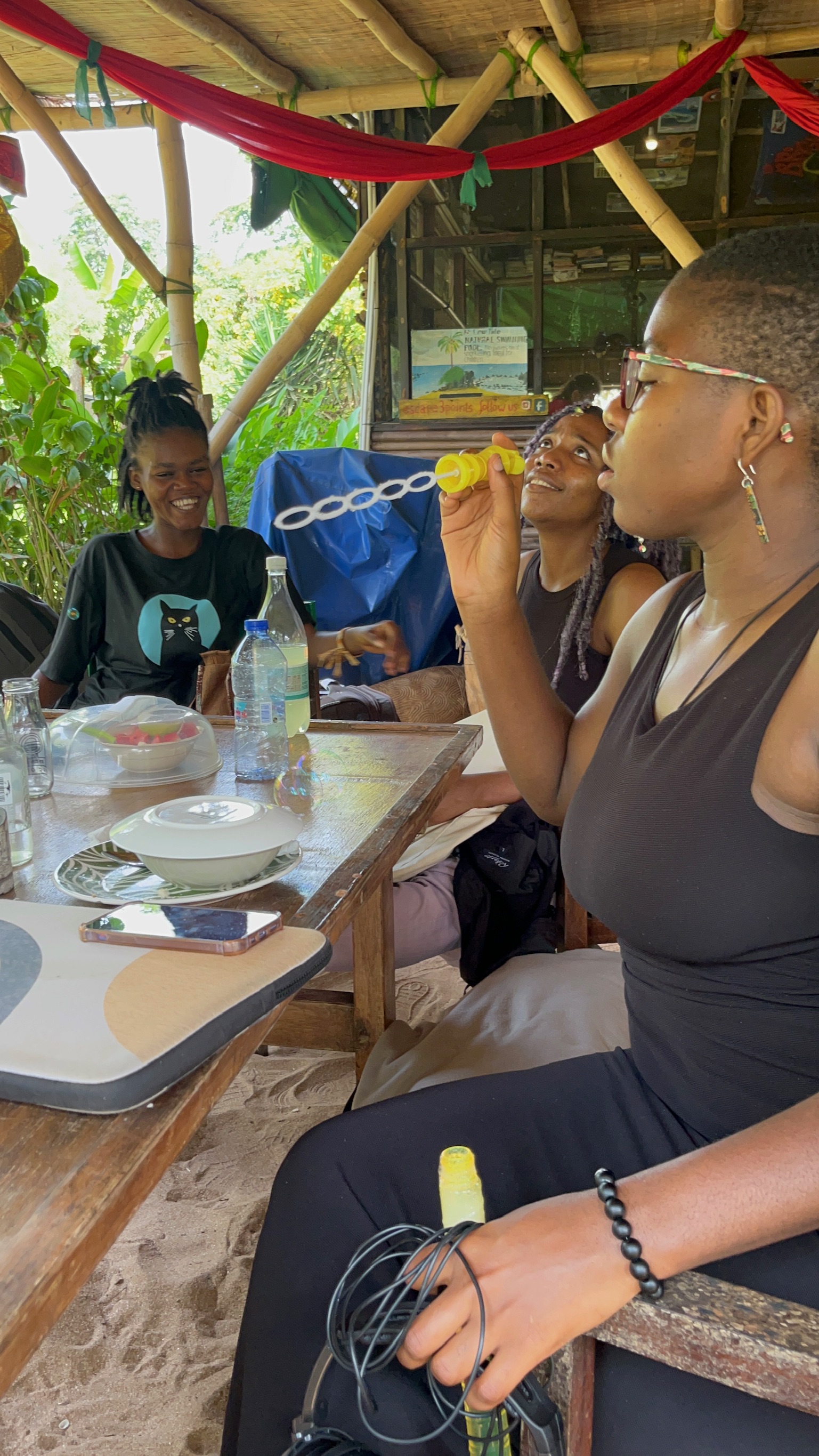
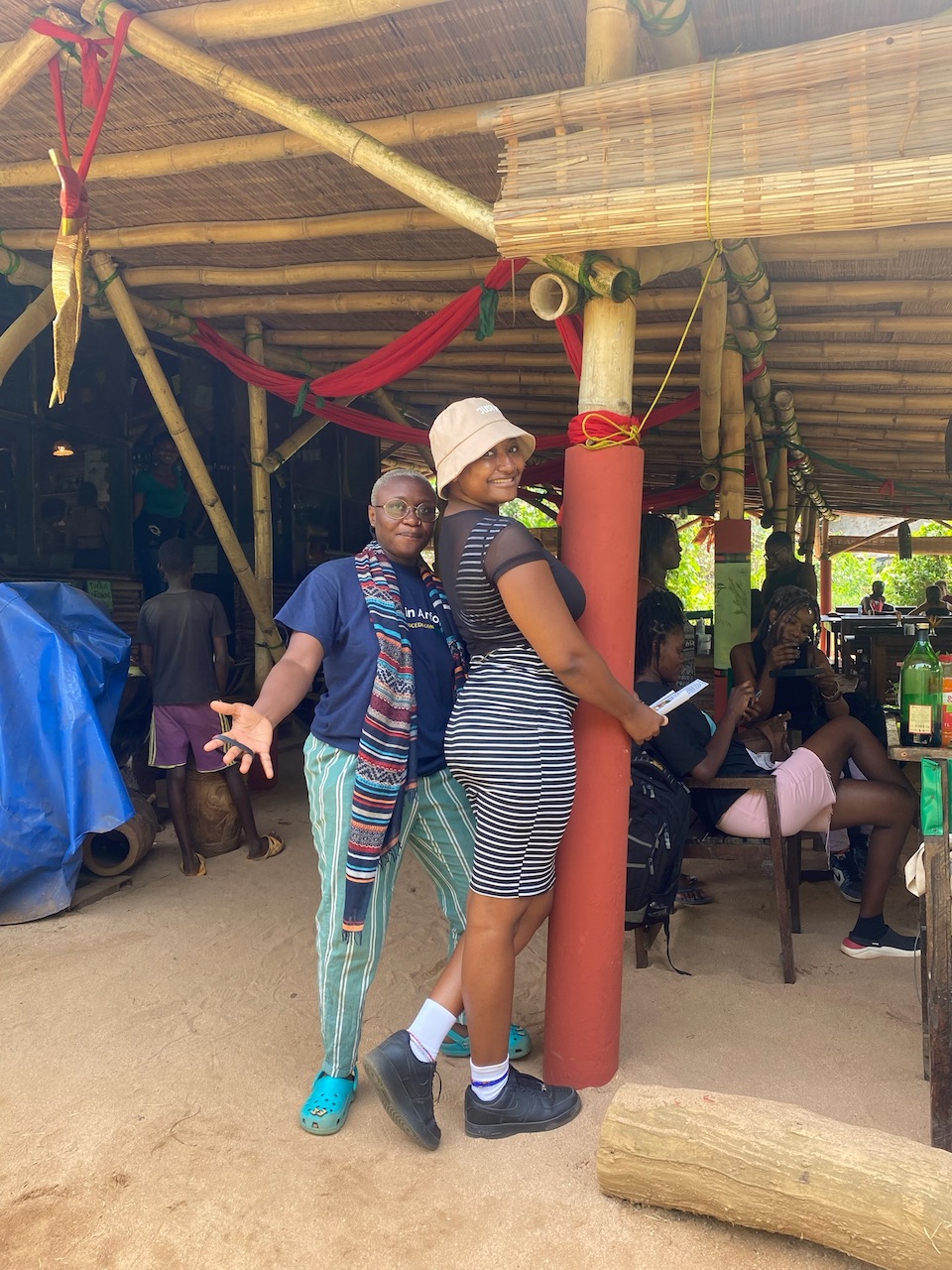
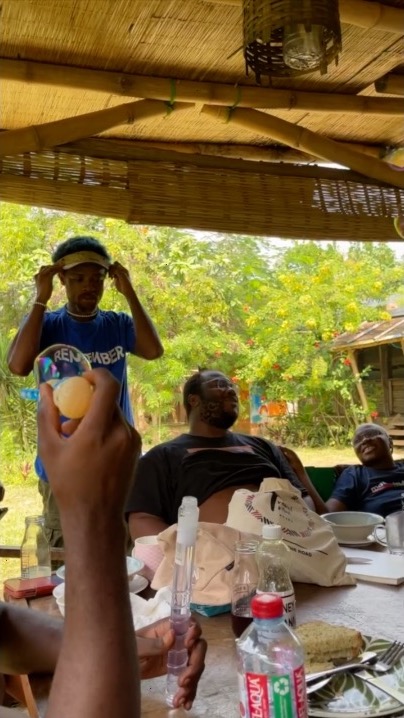
And when I think of Flo, Sol, Nyash the cat, or the good old dogs – Whiskey and Charlie, I will remember Escape 3 Points for all its warmth. When I think of Escape 3 Points, I will remember all these and more – the Travel Tribe’s nightly conversations, the ‘good mornings’ that came with the question of ‘did you sleep well?’ the look of concern when one of the Travel Tribe members so much as breathed a cough, the shared breakfasts. I will remember the picture of Akwasi Mclaren standing out as the man in action, moving around and being there for his guests one at a time. I will remember him coming to our dining table with an antihistamine for Mercy because she had reacted to an ingredient in the food. I will remember Flo, another lodger and the good doctor scurrying over with his travel group to care for Mercy. And when I think of the Travel Tribe, I will remember not just the places we visited but the journey we took together, the road trips, the stop at God is Love Chopbar at Takoradi, the conversations on the bus, the sing-alongs, Efua’s singing wafting into my Instagram recording, meeting Sheila of the travel tribe.
Of course, it’s good to plan. It’s also great to go to places for its landmarks and sights. However, this Ghana experience is very special to me, and I would not give it up for anything. Yes, Mawuu had shared the Travel Tribe’s plan of visiting Escape 3 Points with me, but I honestly didn’t read anything in the chat group. If not, I would have known to go with my Ankara for the 31st dinner.
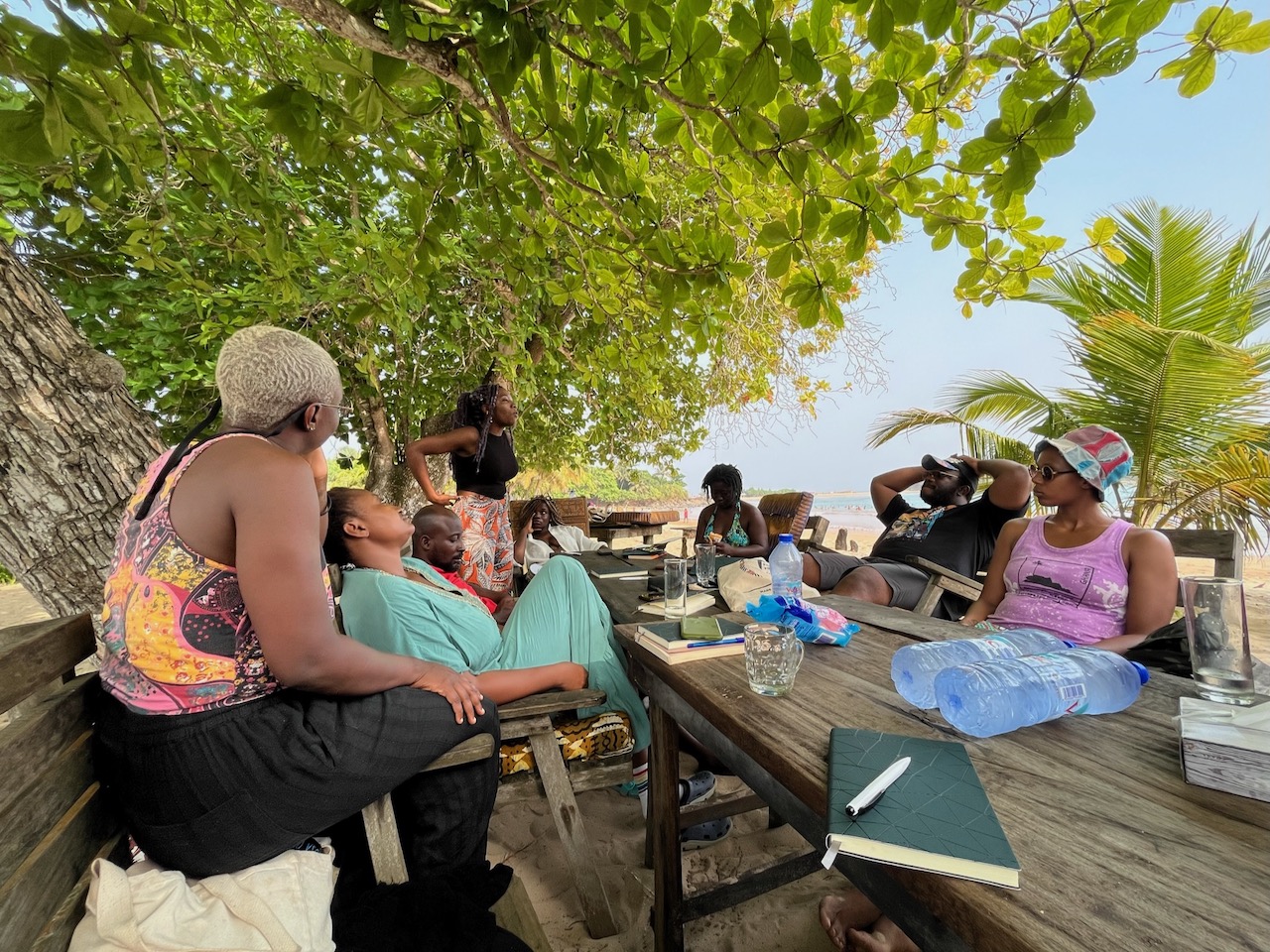
On the eve of 29th December at Escape 3 Points, Mawuu asked us what we hoped to get out of this trip, and I said something about wanting to get out of myself and feel more comfortable with other people. I had made that up on the spot, but perhaps it wasn’t far from the truth. Perhaps, if I had also said I wanted to slow down, that may have also been close to the truth. But the truth was that I hadn’t thought of anything I had hoped to get out of the trip.
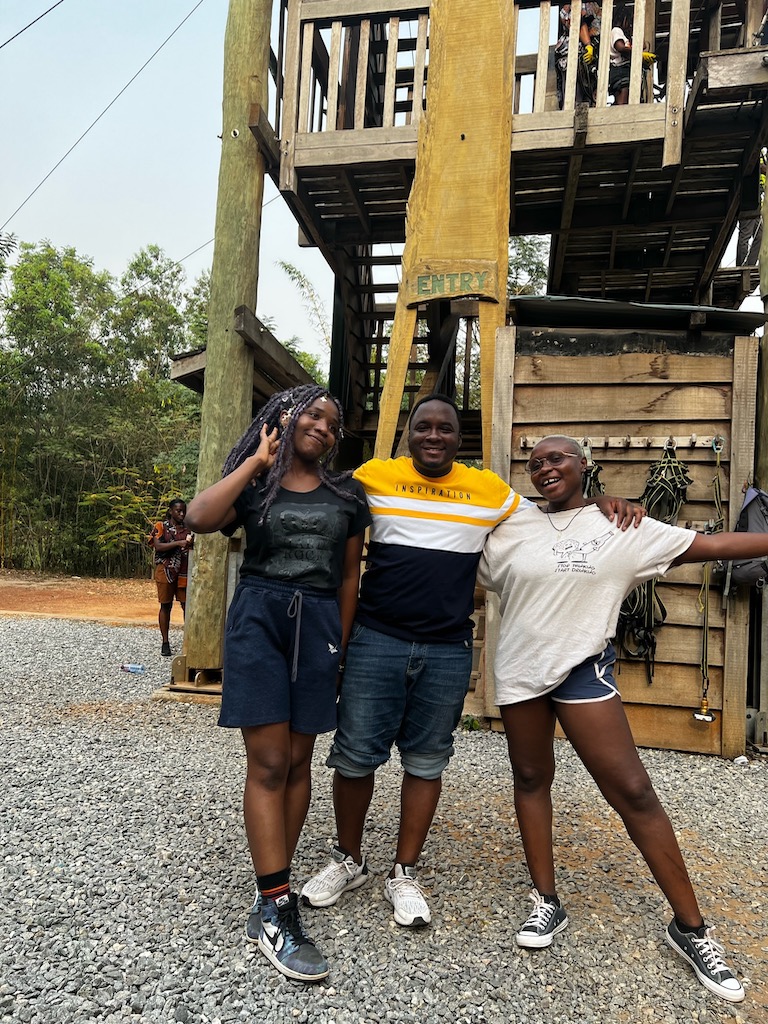
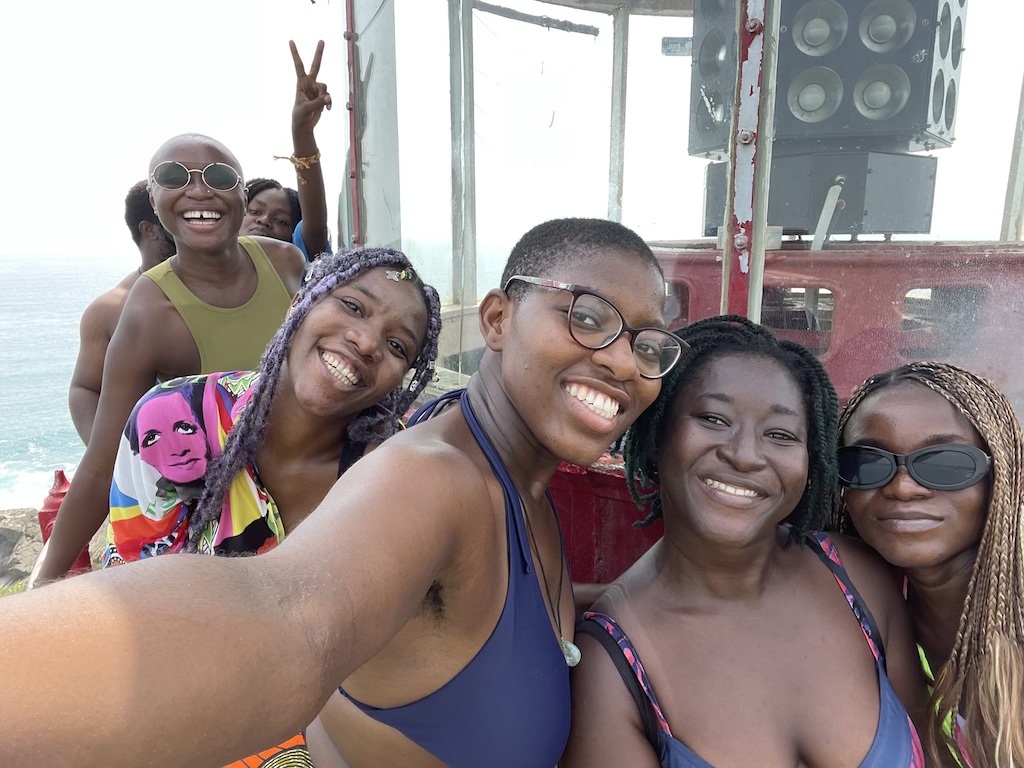
Reflecting on this trip, I think just like Derek Sivers and Amit Chaudhuri, my purpose of going to Ghana was to meet the people I’d had the pleasure of meeting – Mawuu, Eyram – the travel tribe – Sheila, Efua, Mercy, Kennetha, Ama, Nana, Prynx, Fui, Kwaku, Pearl, Jenny, Kelechi, Whiskey. The guests I had connected with at Escape 3 Points – Sol, Flo, Artis3, Eva, Charley, Nyash; the cheerful staff at the wondrous lodge and Akwasi Mclaren.
And these conversations with these people who have become a family I never knew I needed are precious memories I cherish. Meeting them and knowing them, interacting with the places I visited, writing the story of Escape 3 Points, meeting me again.
Travelling means finding new inspirations because when the thought of writing a story about this place came like a guest during my Yoga with Efua, Mercy and Sol, I watched it as it made its visit. The thought flitted around, then came again and again until I made sense of it. Still, never in my wildest dreams had I imagined making a video until the interview day when Eva accompanied Akwasi with her phone and a tripod.
Travelling means finding new experiences. It means finding new perspectives. It means finding new adventures. It means finding memories and creating lasting impressions. It means finding connections and building relationships across cultures. It means finding more about oneself. Because in travelling, you take pieces of yourself to foreign places where you meet other people who have also brought pieces of themselves. Travelling offers us a chance to start all over again with others without preconceived notions of who we are or who they are. Doyin says, “travelling makes you a new person,” and I could not agree more.
PS: You can watch my travel highlights on my Instagram, or read my interview with Akwasi Mclaren about the Escape 3 Points story on Creatives Around Us.

 The winged time traveller